Winning submission of the 2025 Massed Choir Festival Composition Competition. Will be premiered in Perth in 2025.
Continue reading “Watch Us Shine”

Winning submission of the 2025 Massed Choir Festival Composition Competition. Will be premiered in Perth in 2025.
Continue reading “Watch Us Shine”
Discover the enchanting rendition of the Ukrainian folk song ‘Shchedryk’ by Ben Clapton, now available for SATB Choir and orchestra at Joyful Noise Music Studio. With a beautifully crafted orchestral introduction, this arrangement brings a fresh perspective to this beloved classic.
Originally performed by the Metropolitan Symphony Orchestra, Perth, alongside the Echoes of Ukraine choir, this adaptation retains the authenticity of the original Cyrillic lyrics while offering a convenient transliteration for ease of singing. Dive into the heartfelt harmonies and cultural resonance of ‘Shchedryk,’ a timeless piece that beautifully merges tradition with innovation.
Ideal for choral groups seeking a unique addition to their repertoire or orchestras aiming to evoke emotions through music, this arrangement invites performers to explore the beauty and depth of Ukrainian folk melodies. Experience the charm of ‘Shchedryk’ through Ben Clapton’s skillful arrangement—a musical journey that honours tradition while embracing contemporary expression.”
Shchedryk will be performed on February 25, 2024 at the Metropolitan Symphony Orchestra’s 2024 Young Artists Gala at Government House Ballroom, Perth, with MetSO and the Echoes of Ukraine choir. For more information and tickets, visit the MetSO website.

I’ve attended a number of different colleges, and collected a nifty collection of letters after my name. I value education, and I think it is important to always be a life-long learner. Whether that is in formal studies, or through other means, it is important to constantly be improving ourselves and what we are doing.
My first qualification was an Advanced Diploma of Performing Arts from WAAPA@ECU (WA Academy of Performing Arts at Edith Cowan University). Heading straight here from high school, I threw myself into my studies and performing. Here I got to study from teachers such as Jacek Slawomirski, Rebecca White, and Peter Tanfield, as well as lecturers who challenged and extended my musical knowledge.
Upon graduating, I transferred to complete a Bachelor of Music at WAAPA@ECU, which was another 18 months. When I completed that, I felt like I had enough of university, and went off to try and make it in the world. In hindsight, I should have stuck out an extra year to get a Graduate Diploma of Education, as it would have been incredibly helpful.
When I was accepted to the Salvation Army Training College to become a Salvation Army Officer, the formal studies were conducted under the auspices of the then Melbourne College of Divinity. While I was there, there was significant changes underway. MCD changed from a college to a university and first became the MCD University of Divinity, and then finally the University of Divinity. The Melbourne based Salvation Army Training College also changed names, first becoming (if I remember correctly) Booth college, before being corrected to Catherine Booth College (and would later combine with Booth College from Sydney to become Eva Burrows College).
Here, I started with a Graduate Diploma of Theology, before moving onto a Master of Divinity, which was mostly completed through Whitley College, the Baptist college of divinity which was also part of the University of Divinity. The biggest part of this was a research project where I explored my own experiences of combining an Activist and Contemplative faith, with the history of The Salvation Army in the actions of the Maiden Tribune affair.
After moving back to Western Australia, I enrolled in a Master of Teaching at ECU in order to become a music teacher. Here I explored Classroom management strategies, as well as refining my musical pedagogy knowledge. I initially went in only wanting to be an instrumental teacher, but when I got into the classroom, I loved it and never wanted to leave. I graduated at the end of 2022, and walked straight into a fantastic role that while daunting, I am absolutely loving.
So there’s my colleges, and all the studies which led me to be Ben Clapton, MTeach, MDiv, GradDipTheol, BMus, ADPA. There are no plans to add in any extra letters at this stage… but who knows what the future may hold.


The beginning of a year brings with it a sense of anticipation for the new. In Australia, as the school year lines up with the calendar year, the new year brings with it a natural sense of change. Heading into 2024, I face a number of new changes and challenges that lie ahead of me. Some of these challenges are what I would describe as demands – those that are facing me as part of my job, or family commitments. Others are desires – things that I want to achieve for my own personal benefit.

In terms of my work challenges, I enter 2024 with a new position – the music department at my school is now me. I am the one in charge, and its success all lies on my decisions. Part of that is modifying and creating programs that I hope students will find engaging, challenging, and will achieve success that will make them want to select music for the next year, which will allow the program to grow. Build on existing networks to supplement growth, and then support ensembles and performances within the school. All in all, it is a big year, and I have big plans. But to achieve those big plans, it means working through my holidays. Hopefully, not too much, but still a bit.
In an attempt to secure success, I’ve started using the Momentum Planner app. When I was working as a Salvation Army Officer, I used this to achieve my strategic goals. Part of what I liked about it was that I could set yearly, quarterly, and monthly projects that would then be broken down into weekly and daily tasks. What I particularly likes was that it had the flexibility to attend to tasks that would crop up, whilst keeping you focused on your larger, long term goals. What I didn’t like was that it was paper based, which meant a lot of copying of goals down the line. However the new app has solved that issue so I can spend less time copying, and more time focused on my tasks. A little bit of time at the end of each week, month, and term – as well as some time at the beginning of this year, will hopefully set me up for a year of great development.
If you know my family, you know that we have our challenges. A neurodiverse family will always have that. But 2024 presents a number of significant challenges for us. Part of that is that we’re moving into our new home – a home that we’ve built to hopefully allow us as a family to succeed. Each with our own space. I’m looking forward to moving into my new music room, which will hopefully spark a new creativity for me. But along with that is the challenge of preparing our current house, cleaning, painting, making it look presentable. Packing, decluttering, and a constant sense of living in flux until it’s all sorted. For a neurodiverse family who doesn’t cope with stress, change, and anxiety well – we’re all a little on edge. But a big push and soon we will hopefully be in for some less challenging waters.

I have in my head a lot of dreams and desires for what I would like to achieve. Away from teaching, I love performing on my violin. And so I want to continue to develop my technique so that I can hopefully create more performance opportunities. I love composing and arranging music, and I want to spend time doing that. I’ve started work on what I think will be my first Symphony. Will it ever be performed? I don’t know. But part of the joy of composing for me is enjoying writing and exploring textures and timbres that I enjoy listening to. I’m sure that if I had a deadline on it for when it needed to be ready, my approach would change, but for now I enjoy pottering on it when I feel the desire.
But one of my constant challenges is how to balance the work demands, family demands and the demands of my personal desires. How to achieve all of this without letting one drop, or going crazy. This is where I hope that Momentum App will be able to help me keep on track of the demands and help me work towards a successful 2024.

Looking for a beautiful and soulful string quartet arrangement of the hymn “The Lord’s My Shepherd“? Look no further than Ben Clapton’s rendition of this timeless classic, set to the hymn tune Crimond.
At Joyful Noise Music Studio, we’re proud to offer this stunning arrangement, which features all instruments sharing the melody, as well as a modulation to the minor key and a key change for the final verse.
The hymn tune Crimond has a rich history dating back to the 19th century, when Scottish church musician Jessie Seymour Irvine composed the melody. Since then, it has become one of the most beloved and widely recognized hymn tunes in the world, with countless artists and ensembles performing their own interpretations over the years.
If you’re looking to add a touch of elegance and reverence to your next religious service or special event, Ben Clapton’s string quartet arrangement of “The Lord’s My Shepherd” is the perfect choice. So why wait? Order your copy today and experience the beauty and power of this timeless hymn like never before. And remember, with Joyful Noise Music Studio, you’re always in good hands.

Sunday February 25, 3:00pm
Government House Ballroom
Featuring MetSO Young Artists and the Metropolitan Symphony Orchestra and MetSO Chamber Ensembles.
Repertoire to include a performance of Shchedryk arranged for Orchestra and Choir by Ben Clapton.
For more information, see the MetSO Website.

Looking for a timeless and beautiful string quartet arrangement of the Easter hymn tune, “Now the Green Blade Rises”? Look no further than the stunning arrangement by Ben Clapton of Joyful Noise Music Studio!
This arrangement is a wonderful showcase of Clapton’s talents as a composer and arranger. He has taken the old French tune Noel Nouvelet and created a lush and harmonious piece of music that is perfect for Easter services, weddings, and any other special occasion. The piece is scored for two violins, viola, and cello, making it a perfect choice for a skilled string quartet.
This arrangement of “Now the Green Blade Rises” starts with a standard hymn tune arrangement, with the melody in the first violin. However, as the piece progresses, Clapton expands on this basic arrangement with more ornamentation and a greater use of harmony.
About halfway through the piece, the tune is transformed into compound time, which adds a whole new layer of complexity and depth to the arrangement. The tune is passed around the quartet, with each instrument taking a turn at playing the melody and adding their own unique ornamentation.
Finally, the piece returns to simple time for a joyous finish to the arrangement, with all four instruments playing together to create a beautiful and uplifting finale.
This arrangement of “Now the Green Blade Rises” is not only beautiful to listen to, but also fun and rewarding to play. Musicians of varying skill levels will find something to enjoy in this arrangement, from the simple and straightforward beginning to the more complex and challenging middle section.
If you’re looking for a beautiful string quartet arrangement of a classic Easter hymn tune, look no further than Ben Clapton’s arrangement of “Now the Green Blade Rises”. Available for purchase from Sheet Music Direct and Sheet Music Plus, this arrangement is a must-have for any string quartet looking to add a beautiful and uplifting piece of music to their repertoire.

Looking for a beautiful and soulful string quartet arrangement of the classic hymn “Crown Him with Many Crowns”? Look no further than the stunning arrangement by Ben Clapton, available exclusively from Joyful Noise Music Studio!
This arrangement brings new life to the timeless hymn, which is set to the stirring tune “Diademata.” With its soaring melodies and rich harmonies, this piece is perfect for use in church services, weddings, and other special events.
But who are the creators of this beloved hymn? “Crown Him with Many Crowns” was written by the British composer Matthew Bridges in 1851, and its stirring lyrics were set to the melody “Diademata” by Sir George Job Elvey.
Bridges, who was born in 1800, was a Catholic convert who wrote numerous hymns and religious works. Elvey, who was born in 1816, was a prominent organist and composer who served as the organist at St. George’s Chapel in Windsor Castle for more than 40 years.
Together, these two talented men created a hymn that has endured for more than a century and a half. And now, thanks to the skillful arrangement by Ben Clapton, this classic hymn can be enjoyed anew in a beautiful and stirring string quartet setting.
So whether you’re a church musician looking for new arrangements for your worship services, or a music lover looking for something special for your next event, be sure to check out the stunning string quartet arrangement of “Crown Him with Many Crowns” by Ben Clapton, available now from Joyful Noise Music Studio.
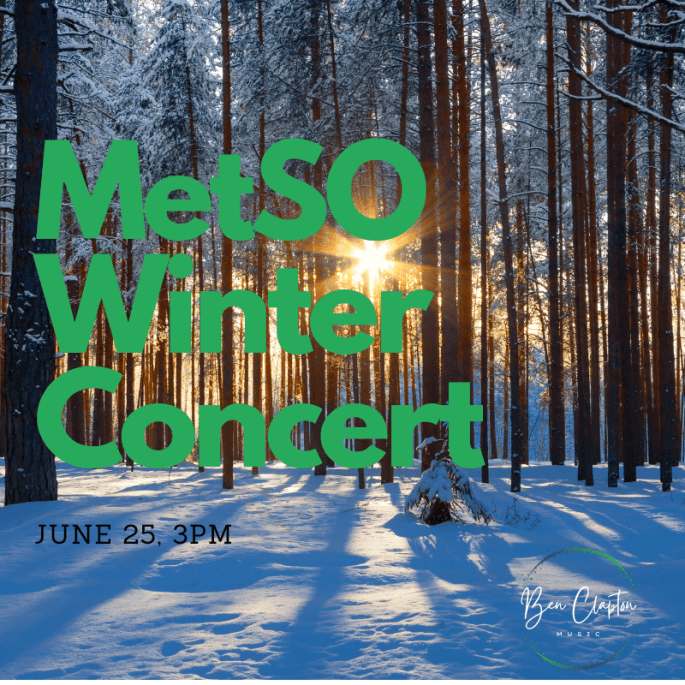
3PM, 25 June, 2023
Taryn Fiebig Concert Hall, Churchlands Senior High School
Featuring MetSO Young Artists – Chern Yue Khor and Madeleine Wickham Brown.
For more information, visit the MetSO Website.

Introducing “Disciples, Kneeling, at the Cross” – a powerful and moving brass band arrangement of “Am I a Soldier of the Cross” by Ira D Sankey and “At the Cross” by Darlene Zschech and Reuben Morgan.
The first song “Am I a Soldier of the Cross” is a 19th century hymn written by Ira D. Sankey. It is a powerful song that encourages believers to be steadfast in their faith, like soldiers in battle. It reminds us of the sacrifices we make as Christians, and our commitment to follow Jesus, even in the face of adversity.
The second song “At the Cross” by Darlene Zschech and Reuben Morgan is a modern worship song that reflects on the sacrifice of Jesus on the cross. It is a reminder of the love and grace that God offers to all who believe, and a call to worship and surrender to Him. The song encourages people to leave their burdens at the cross and experience the freedom and forgiveness that can only come through Jesus.
Expertly arranged by Ben Clapton for a British style brass band, this piece was originally performed by the esteemed Melbourne Staff Band of The Salvation Army in 2013. The British-style brass band is the perfect ensemble to convey the emotions of the two songs combined, with its rich and powerful sound. The brass band adds a new dimension of emotion and power to these already moving songs.
Immerse yourself in the rich and uplifting sound of a brass band as they pay tribute to the sacrifice of Jesus at the cross. Perfect for church services, concerts, or any event where a powerful message of faith and devotion is needed. Experience the majesty and power of “Disciples, Kneeling, at the Cross” today! This arrangement is an excellent way to honour the sacrifice of Jesus and to remind ourselves of our commitment to follow Him. It is a powerful reminder of the love and grace that God offers to all who believe and it will leave a lasting impression on the audience.


 Ben Clapton