His love endures forever

Now we ask you, brothers and sisters, to acknowledge those who work hard among you, who care for you in the Lord and who admonish you. Hold them in the highest regard in love because of their work. Live in peace with each other. And we urge you, brothers and sisters, warn those who are idle and disruptive, encourage the disheartened, help the weak, be patient with everyone. Make sure that nobody pays back wrong for wrong, but always strive to do what is good for each other and for everyone else.

Rejoice always, pray continually, give thanks in all circumstances; for this is God’s will for you in Christ Jesus.

Do not quench the Spirit. Do not treat prophecies with contempt but test them all; hold on to what is good, reject every kind of evil.

May God himself, the God of peace, sanctify you through and through. May your whole spirit, soul and body be kept blameless at the coming of our Lord Jesus Christ. The one who calls you is faithful, and he will do it.

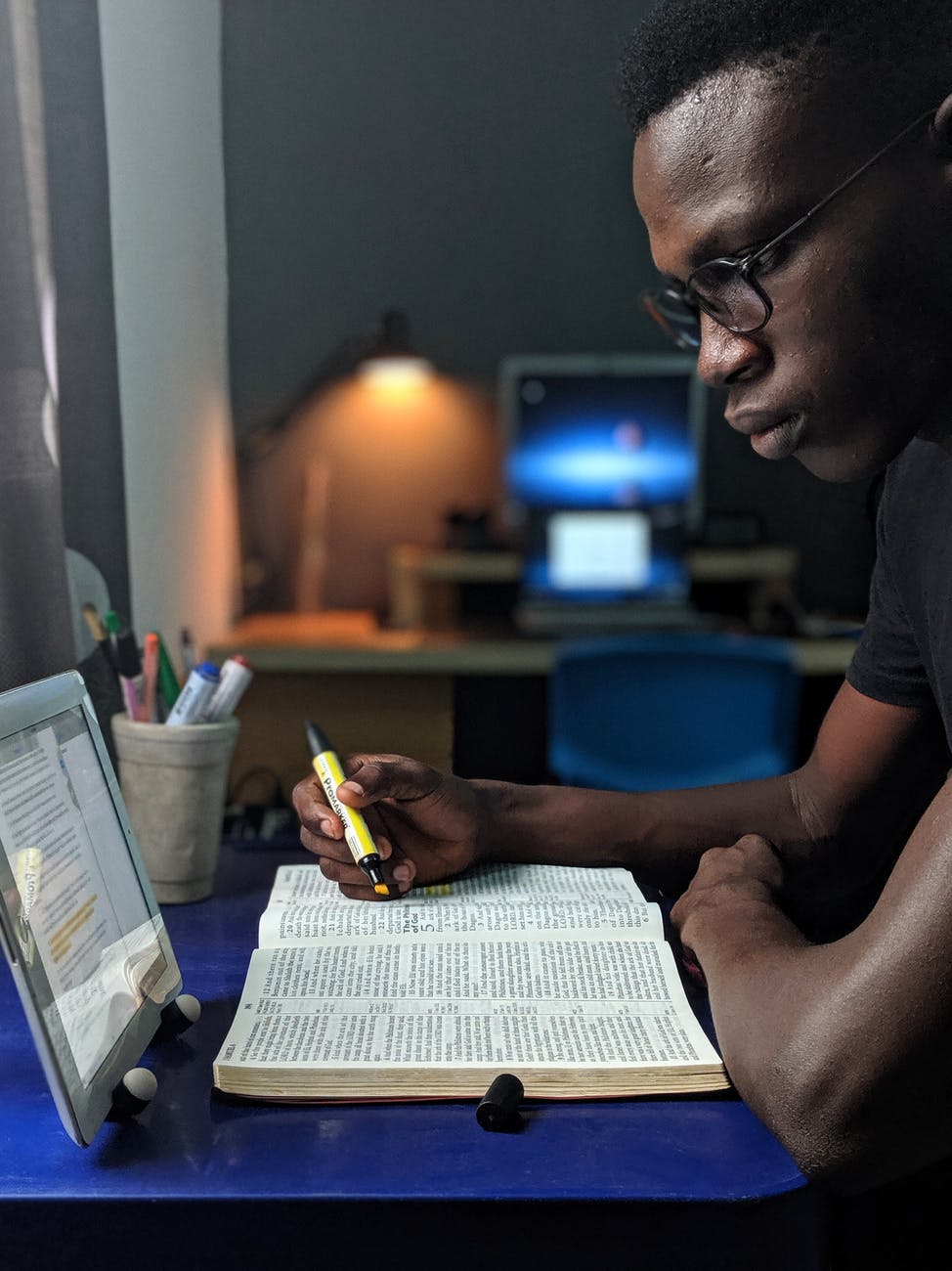
1 Thessalonians 5:12-24

This passage is really full of meaning here, full of hope and more. It really could be the subject of a few blog posts, but there are a few things I really want to share with you today.

These words come at the end of the first letter to the Thessalonians, and in the NIV are headed “Final Instructions.” This is basically a list of things that Paul needed to share with the Thessalonians. It’s a great list of goals for a Christian. Acknowledge those who work hard, hold them in the highest regard. Live in peace with each other. Encourage the disheartened (sometimes interpreted as “Strengthen the disheartened”), help the weak, be patient with everyone.

Rejoice always, pray continually, give thanks in all circumstances. Those last three are wonderful calls to what we should do. We should always rejoice in what the Lord is doing in our lives. We need to pray continually as it’s through praying that we establish and maintain our relationship with God. We need to give thanks in all circumstances. Not just in the good times, but also in the bad times. Romans 5 says that “we also glory in our sufferings, because we know that suffering produces perseverance; perseverance, character; and character hope.” So in the bad times, in our sufferings, we should give thanks because we know that it will create character and hope. That doesn’t make it easy, but knowing that gives us hope. Thanking God always gives us hope, because we have God’s love, that “has been poured out into our hearts through the Holy Spirit” (Romans 5:5)

Finally, Paul shares this benediction: “May God himself, the God of peace, sanctify you through and through. May your whole spirit, soul and body be kept blameless at the coming of our Lord Jesus Christ. The one who calls you is faithful, and he will do it.” We don’t know when Jesus will come. It’s difficult for us to make ourselves blameless. We must humble ourselves before God and allow him to chip away those things that keep us from being the reflection of Jesus.

My officer shared this video on the Sunday Night service yesterday. There’s all this stuff that we have in ourselves that keep us from being God’s original masterpiece. It’s like those paintings that are hundreds of years old. They need to go through restoration, and the difference at the end is incredible – it is the original masterpiece once again. Are you willing to let God chisel away all the things that have been added to your life, and allow yourself to be God’s original masterpiece once more?

Forever God is faithful. Forever God is true. Forever will his mercy flow to you, and forever will he embrace you, and be willing to restore you. Be faithful, because the one who calls you is faithful, and He will do it.

Postaday2011 links

The Perfect Sunday

The perfect Sunday comes in finding balance. Balance between sharing time with God, and finding time to have a sabbath. So often, our Sunday will be absolutely packed – for example last Sunday, when we went from Church in the morning, to a nephew’s birthday on the other side of the metro area, to a friends 22nd on another side of the city once again. It was literally non-stop. And while we had great times while we were there, when we fill our weekends with days like these, we get to Monday and think, where did our weekend go?

Sometimes, I think that the perfect Sunday is actually a Saturday. A day when we get the time to really sit and relax. Wake up slowly. Enjoy that first coffee. Maybe see some friends or family in a relaxed environment. Have no rush about anything – it can always get done tomorrow.

What’s your perfect Sunday?

Postaday2011 links

An interventionist God?

The topic from The Daily Post today is a tough one. Do you believe everything happens for a reason? Why or why not? It’s a tough topic to look at, as a Christian.

Photo by Oladimeji Ajegbile on Pexels.com

See, as Christians, we believe that we have free will – God gave us free will, which led to the fall of man, and the need for Jesus to come to forgive all our sins. Yet, God is all-knowing, and all-powerful, and knows what we are thinking before we even think it. So does that change things, for although we have free will, God knows what we’re going to do before we do it.

There are also Christians who believe that God is an interventionist God – basically meaning he is still active and changing things in the world, and others who don’t. I tend to lean towards the non-interventionist God in a way, believing that he’s still active in our lives, but not controlling such things as the weather. This would not sit comfortably with those Christians who believe that the floods in Queensland were a message from God.

So, do things happen for a reason? Yes and no. Some things happen because we cause them – cause and effect. I know that if I pour a beer over someone, I’m likely to get punched in the face. Or if I help someone out who’s struggling with something, I’m likely to get warm fuzzies. However, somethings happen because it’s the way the world is designed, and there’s nothing we can do about it. We can’t stop the wind blowing, the rain raining, or the sun shining (although sometimes I wish its UV was a little less potent to my skin). What we can do is control how we react to these situations. Do we want to use natural disasters as an excuse to judge people, or do we want to use them as a catalyst to spark Christian action, helping those we do not know?

Postaday2011 links

God Forgets

I’ve been reading my bible again, and going through the book of Job. I’d gone into this book with the assumption of knowing what happens. Job, an upstanding and outstanding man of God, is tested by God and Satan, when Satan causes a whole heap of bad stuff to happen to him. Job goes on a kind of “Woe is me, woe is this, woe is that” spiel for a while, and eventually God appears and explains what happened. Probably not quite right, but that was my understanding of it, not having read the book before. Continue reading “God Forgets”

Crucified By Email (via Mark Sayers)

Christ Driving the Moneychangers from the Temp...
Jesus drives the money changes from the temple - or drives the merchandise sellers from the church/revival/crusade? (Image via Wikipedia)

I found this blog while looking at blogs for work (what a wonderful part of my job) and I thought it was fantastic. It’s a theme that has been hashed out in different formats through different people at different times and basically proposes the question: Would Jesus fit in at our church? Would he be the type of person to fit in at any church? Are church structures too strict sometimes and do we lose our perspective?

When I read this out at my bible study tonight, someone else got me thinking on this. God is too vast, and too immeasurable, too infinite to fit into our churches. He is also someone who judges what the audience wants, what they desire, and gives them what they truly needs. Like in this post, He gets sent to the youth church, where the pastor thinks he’ll fit in – and then changes and gives them something different. Then sent somewhere else based on this latest change, and he changes once again. Each time, he upsets many people, and leaves many people asking questions. All the time, he affects people’s lives, often in ways they do not expect.

Do our churches need to look past our traditions (which are often done because someone once did it for a certain reason, and a church did it ever after), and start looking at what our church – and more importantly, our communities – truly needs?

Crucified By Email On 07/06/2010, at 3:34 PM, Pastor@BelmontCommunityChurch.org wrote: Dear Jesus, I have been praying that you are sensing God’s presence during this difficult week for us all. Last night the Church board and I held an emergency meeting and I am writing to inform you that we have come to a difficult decision. Writing this email is one of the hardest things that I have had to do at my time here at Belmont Community Church. Before I tell you of our d … Read More

via Mark Sayers

Confession

In my morning coffee time, I follow the form ACTS – Adoration, Confession, Thanksgiving, Supplication – in my prayers. This morning, I was in the confession part of the form, and I used the group confession that is used in the Liturgy of the Anglican Church. Continue reading “Confession”

Priorities: God vs Man

I was driving to work today, and an odd thought came into my mind. The thought was of priorities, and how we can often have very different ones. One example came to my mind about different priorities my fiancée and I have. I studied music at Uni, and hence have a very different perspective of rehearsals than my fiancee. We’re in the Songsters at my Corps – a choir that gives a message during the morning service. We rehearse each Wednesday, and sometimes, my fiancee has a slightly “less professional” attitude than myself. Where as for me, I can’t stand being late for a rehearsal, let alone missing one without a valid reason. If it were up to me, I would be arriving at least 15 minutes before the rehearsal was due to begin, where as my fiancee would prefer to arrive right when it’s due to start.

My priorities during rehearsal are also somewhat different to those sitting next to me. I pay attention, sing, run through my part in my mind when the conductor is working with other parts, and stop singing when he requests. Others will muck around, not pay attention, and continue to sing for a little bit after the conductor has finished. We have different priorities, based on what we have experienced.

How do we reconcile different priorities between each other? Also, how do we reconcile when our priorities are different to what God’s priorities are? Continue reading “Priorities: God vs Man”

Jane’s Story

Biblical Truth

Coming down off the mountain with them, he stood on a plain surrounded by disciples, and was soon joined by a huge congregation from all over Judea and Jerusalem, even from the seaside towns of Tyre and Sidon. They had come both to hear him and to be cured of their ailments. Those disturbed by evil spirits were healed. Everyone was trying to touch him—so much energy surging from him, so many people healed! Then he spoke:

   You’re blessed when you’ve lost it all.
   God’s kingdom is there for the finding.
   You’re blessed when you’re ravenously hungry.
   Then you’re ready for the Messianic meal.

   You’re blessed when the tears flow freely.
   Joy comes with the morning.

Luke 6:20-21, The Message

Musical Offering

Ben’s Offering

Jane’s Story

Jane’s* father left when she was three years old.Years later her mother began seeing someone who Jane fought with all the time and at age 14 she was told to leave home. Jane stayed with some relatives for a while until an uncle tried to sexually abuse her, and no one in the family believed her when she told them what had happened. She dropped out of school and began ‘couch surfing’ from one friend’s house to another and met some new friends who introduced her to drugs and alcohol. For the next few years Jane moved between friends’ houses and hostels. Looking back, Jane sees that lots of people tried to help her but either they didn’t know how or she wouldn’t let them. When Jane arrived at YASS she smoked cigarettes, drank alcohol and had taken speed, ecstasy and marijuana. She had been sexually abused twice and was very distrusting of adults. For the first few weeks Jane “sussed out” the staff, looking for ways of affirming that adults were untrustworthy.

After a while she began to notice that the staff genuinely cared about the young people at YASS. They cared about her story and cared for her as an individual. The more of her story that Jane told the more staff were able to help her. With their help Jane stabilised her life and stopped taking drugs and smoking. She began to re-establish some family relationships and discovered that she had a whole other side of her family living in NSW, including a younger sister, who were very interested in meeting her.

Jane couldn’t afford the fare but YASS staff managed to get her a free flight through a corporate sponsor. They found her some temporary accommodation within an hour of where her family lived. Since then Jane has found long term accommodation, is studying full-time at TAFE and working part-time in a café. She volunteers at her local youth centre and wants to become a youth worker.

* Not her real name.

Homeless Young Australians: Issues and Responses, Mission Australia

Donate

UnitingCare Australia is an agency of the National Assembly of the Uniting Church in Australia (UCA). They represent the UCA’s network of UnitingCare community services of which there are over 1,300 service delivery sites nationwide.

The UnitingCare network is one of the largest providers of community services in Australia, providing services to more than 2 million Australians each year, employing 35,000 staff and 24,000 volunteers nationally. It provides services to older Australians, children, young people and families, Indigenous Australians, people with disabilities, the poor and disadvantaged, people from culturally diverse backgrounds and older Australians in urban, rural and remote communities.

You can donate to any of the State Branches: in Western Australia, South Australia, New South Wales and ACT, and Queensland (Donate to one of the service agencies)

Invite the Misfits

Biblical Truth

  Then he turned to the host. "The next time you put on a dinner, don’t just invite your friends and family and rich neighbors, the kind of people who will return the favor. Invite some people who never get invited out, the misfits from the wrong side of the tracks. You’ll be—and experience—a blessing. They won’t be able to return the favor, but the favor will be returned—oh, how it will be returned!—at the resurrection of God’s people."  That triggered a response from one of the guests: "How fortunate the one who gets to eat dinner in God’s kingdom!"

  Jesus followed up. "Yes. For there was once a man who threw a great dinner party and invited many. When it was time for dinner, he sent out his servant to the invited guests, saying, ‘Come on in; the food’s on the table.’

  "Then they all began to beg off, one after another making excuses. The first said, ‘I bought a piece of property and need to look it over. Send my regrets.’

  "Another said, ‘I just bought five teams of oxen, and I really need to check them out. Send my regrets.’

  "And yet another said, ‘I just got married and need to get home to my wife.’

  "The servant went back and told the master what had happened. He was outraged and told the servant, ‘Quickly, get out into the city streets and alleys. Collect all who look like they need a square meal, all the misfits and homeless and wretched you can lay your hands on, and bring them here.’

  "The servant reported back, ‘Master, I did what you commanded— and there’s still room.’

  "The master said, ‘Then go to the country roads. Whoever you find, drag them in. I want my house full! Let me tell you, not one of those originally invited is going to get so much as a bite at my dinner party.’"

Luke 14:12-24, The Message

Musical Offering

Ben’s Offering

From a Salvation Army Media Release, dated 9 July, 2009.

The Challenge to Slash Homelessness by 2020

The Salvation Army welcomes the release of state and territory Counting The Homeless 2006 reports today by the Australian Institute of Health and Welfare. These provide the benchmark data for the efforts required to address homelessness in Australia.

The Australian Institute of Health and Welfare’s Counting the Homeless 2006 reports were co-authored by Associate Professor David Mackenzie from the Institute for Social Research at Swinburne University and Associate Professor Chris Chamberlain from RMIT using 2006 Census data, data on users of SAAP services combined with data from a national census of homeless students. Australia is unique amongst Western countries in having good data on the homeless population and on service usage.

Homeless has remained at about 100,000 persons – men, women and children for a decade and in the past period little priority was given to addressing this issue. Some 30,000 units of public housing were lost and real funding for homelessness services steadily decreased. At a time when Government revenues were recording unprecedented surpluses and unemployment reached a fifteen-year low, homeless people were not able to benefit nor was public money invested in the issue.

The Rudd Government has given homelessness a high priority on its social policy agenda. The White Paper released in December, 2008 by Minister Tanya Plibersek was a landmark document with strong policy positions. However, the global financial crisis has caused huge dislocations in the international economic system and unemployment rates are beginning to rise. Reports are coming in of disadvantaged people being especially affected.

The number of rough sleepers in the inner-city areas of capitals throughout Australia has increased, with the exception of Melbourne, along with the number of children 12 years and under and elderly people 65 and older.

Young people (aged 12 to 25 years) are a significant group in the homeless population on census night – 32,444 individuals in total. The good news is that the number of homeless teenagers on their own has decreased by some 21% from 2001 to 2006 and this is attributed to the impact of early intervention. However, over the same period the number of homeless families increased by 17 per cent. There were 2714 homeless children under 12 in Victoria on census night 2006 – compared with 2618 in 2001 – an increase of 7 per cent. During 2006-2007, the AIHW report Homeless people in SAAP for Victoria reported that 20,500 children had accompanied a parent(s) who were clients of SAAP services.

The Salvation Army is committed to working with the Commonwealth and State Governments to develop effective responses to homelessness. We are particularly concerned about the growing numbers of homeless families. The Global Financial Crisis and the crisis in supply of affordable housing impact this group significantly. It is imperative that we develop early intervention strategies to prevent more families becoming homeless and that interim housing options are put in place for those who lose their homes.

The bold targets set in the Rudd Government’s Homelessness White Paper are achievable but can only be realised if community groups, local communities, corporate and government work collaboratively at the local level to prevent people becoming homeless and respond quickly and appropriately to those experiencing housing crisis. These Census figures assist us to confront these challenges.

The Challenge to Slash Homelessness by 2020, The Salvation Army Southern Territory, Australia.

Donate

Southern Territory Comissioner Jim Knaggs recently posted that The Salvation Army was voted by consumers the most trusted brand in Australia. And with good reason – the Salvos are very much into working with those who are overlooked. Their homelessness programs, their domestic violence refuges, their counselling and drug and alcohol rehabilitation programs have enabled them to help a great number of people. That help can’t happen without financial support, so why not consider donating to the Salvos – you can do so from their website.

Reach Out to the homeless and loveless

Biblical Truth

apw_web_button

So, my very dear friends, don’t get thrown off course. Every desirable and beneficial gift comes out of heaven. The gifts are rivers of light cascading down from the Father of Light. There is nothing deceitful in God, nothing two-faced, nothing fickle. He brought us to life using the true Word, showing us off as the crown of all his creatures.  Post this at all the intersections, dear friends: Lead with your ears, follow up with your tongue, and let anger straggle along in the rear. God’s righteousness doesn’t grow from human anger. So throw all spoiled virtue and cancerous evil in the garbage. In simple humility, let our gardener, God, landscape you with the Word, making a salvation-garden of your life.

Don’t fool yourself into thinking that you are a listener when you are anything but, letting the Word go in one ear and out the other. Act on what you hear! Those who hear and don’t act are like those who glance in the mirror, walk away, and two minutes later have no idea who they are, what they look like.

But whoever catches a glimpse of the revealed counsel of God—the free life!—even out of the corner of his eye, and sticks with it, is no distracted scatterbrain but a man or woman of action. That person will find delight and affirmation in the action.

Anyone who sets himself up as “religious” by talking a good game is self-deceived. This kind of religion is hot air and only hot air. Real religion, the kind that passes muster before God the Father, is this: Reach out to the homeless and loveless in their plight, and guard against corruption from the godless world.

James 1:17-27, The Message

Musical Offering

Ben’s Offering

The Brotherhood of St. Lawrence provides a document stating the difference between the Henderson poverty Line, and what people receive from Centrelink payments. The data is pretty shocking. For the March 2007 Quarter, a couple, one of whom is in the workforce with two dependant children,  the Poverty line was drawn at $661.45. Centerlink would pay such a family $541.08, a difference of $120.37. In fact, the only situation where someone on Centrelink payments would not be below the poverty line is if they are a couple over the age of 65 and not in the workforce, or a couple on the disability support pension.

This is not good enough!

The government should be taking more action to ensure that no-one that it is supporting is forced to live below the poverty line. Today, as an action, write to your local member, asking them what is being done about reducing the gap between the poverty line and centrelink payments, and pray for those who are living below that line.

Donate

The Brotherhood of St Laurence was the vision and creation of Fr Gerard Tucker, a man who combined his Christian faith with a fierce determination to end social injustice. The Brotherhood has developed into an independent organisation with strong Anglican and community links. They continue to fight for an Australia free of poverty.

They provide a full range of services including job training and placement programs, care for the elderly and people with disabilities, early childhood development programs and support services for newly arrived refugees and migrants. These services are focussed in Victoria, from Craigieburn in Melbourne’s North down to Frankston on the Mornington Peninsula.

Visit the Brotherhood of St. Lawrence website to donate to their vital work.