
But the Lord was not in the Earthquake

Cover of "Where Is God When It Hurts?"
Cover of Where Is God When It Hurts?

I wasn’t going to write about the New Zealand Earthquake, because quite honestly I didn’t think that I had anything to offer. There were plenty of things that I could write about this terrible tragedy, but should I use such a tragedy to get views on my website? It just didn’t seem quite right.

However, I noticed in my RSS feeds a couple of posts with a similar theme. Transforming Mission titled theirs “Where is God when it hurts? Where is God in the Suffering?” and the Wondering Pilgrim entitled his post “The “why?” question rises again

So while I don’t want to address the earthquake itself, I want to look at a couple of pieces of scripture that come to mind. First from 1 Kings 19.

The Lord said, “Go out and stand on the mountain in the presence of the Lord, for the Lord is about to pass by.”
Then a great and powerful wind tore the mountains apart and shattered the rocks before the Lord, but the Lord was not in the wind. After the wind there was an earthquake, but the Lord was not in the earthquake. After the earthquake came a fire, but the Lord was not in the fire. And after the fire came a gentle whisper.

1 Kings 19:11-12 (NIV)

“For my thoughts are not your thoughts,
neither are your ways my ways,”
declares the Lord.

“As the heavens are higher than the earth,
so are my ways higher than your ways
and my thoughts than your thoughts.

Isaiah 55:8-9 (NIV)

Two thoughts relating to these passages. Firstly, the passage from 1 Kings. God was not in the great and powerful wind, nor the earthquake or the fire. After all of that came a gentle whisper – and the Lord was in the gentle whisper. When you think about what has happened in Oceania in the past few weeks, we have had floods, fire, cyclones and earthquakes. All disasters. All things that we wouldn’t wish on our enemies. But after all of these, what comes? Growth, renewal, revitalisation, rebuilding. Sometimes, you need to go through the pain to get to the point of growth. After the disasters, God is there. That is evidenced by the multitudes of Christians (and non-Christians, I must point out) making themselves available to help out. Whether that’s serving the emergency services workers food and drink when they’re working, or whether it’s donating proceeds of Op Shop sales, or holding retiring offerings as donations to relief funds, God is there in the recovery.

As for the passage from Isaiah, God’s ways are different from ours. We can pray for things to change, and we should be encouraged to do so. However, we should not be disappointed when our prayers seemingly go unanswered. Our ways are not God’s ways. God’s ways are higher than our ways. As my officer put it, The deepest, most insightful, most brilliant of our thoughts is foolishness to the Lord, and the Lord’s most foolish thoughts are still far beyond our understanding. I believe that God’s heart would have broken over the lives lost in these recent disasters. Could he have stopped the earthquake? Absolutely. He is the one who created the world. However, as I share a thought from my dad, The Lord is the one who put this world in motion. He is the one who created the world. He created the laws of nature. If he was to come and stop an earthquake, or a flood, or a cyclone, he would be saying that the laws that he put in place we not perfect, as he is perfect. It would make everything that our world is based upon based on a lie. Whether this thought is how it works or not, I don’t know. And I’ll probably never know. However, it is through this thought that I can make peace with God when I get angry that prayers go unanswered. He knows what he’s doing. He has my life in his hands, and I will trust him completely. Though it may be painful, though it may be beyond comprehension, I will trust in him, and pray to him, and praise him whatever the outcome.
The servant who wouldn’t forgive

On Sunday, my officer preached on a passage from Matthew. It was the passage where Peter asks how many times he should forgive someone who sins against him. While the sermon was on forgiveness, there was one insight that really got me thinking in a way I hadn’t thought about it before.
When the master, having already forgiven the servant around 150,000 years wages of debt, found out about the servant not forgiving another servant three months wages, he was furious and threw the man in jail until he could pay back his debt. Jesus says that this is how people who don’t forgive will be treated by God.
It was just a passing reference, but the way my officer explained this made a light click on in my brain. When we have been forgiven and we don’t then forgive we are like the servant. in the same way, if we are a Christian, but decide not to give up our old ways, we are just like the servant who did not forgive.
It’s tempting to live a life of sin, knowing that Jesus will forgive, but this passage seems to say that if you know about salvation but do nothing about it, you are just as bad as someone who never knew. Often is is 1 Thessalonians 5:23 that is used to say that we should keep our lives blameless until Christ returns. However, that seems to be based upon a misinterpretation. Instead, I believe it should be this passage – which some may say holds more weight due to coming from the words of Jesus – should be our encouragement to live loving and blameless lives.

Postaday2011 links

An interventionist God?

The topic from The Daily Post today is a tough one. Do you believe everything happens for a reason? Why or why not? It’s a tough topic to look at, as a Christian.

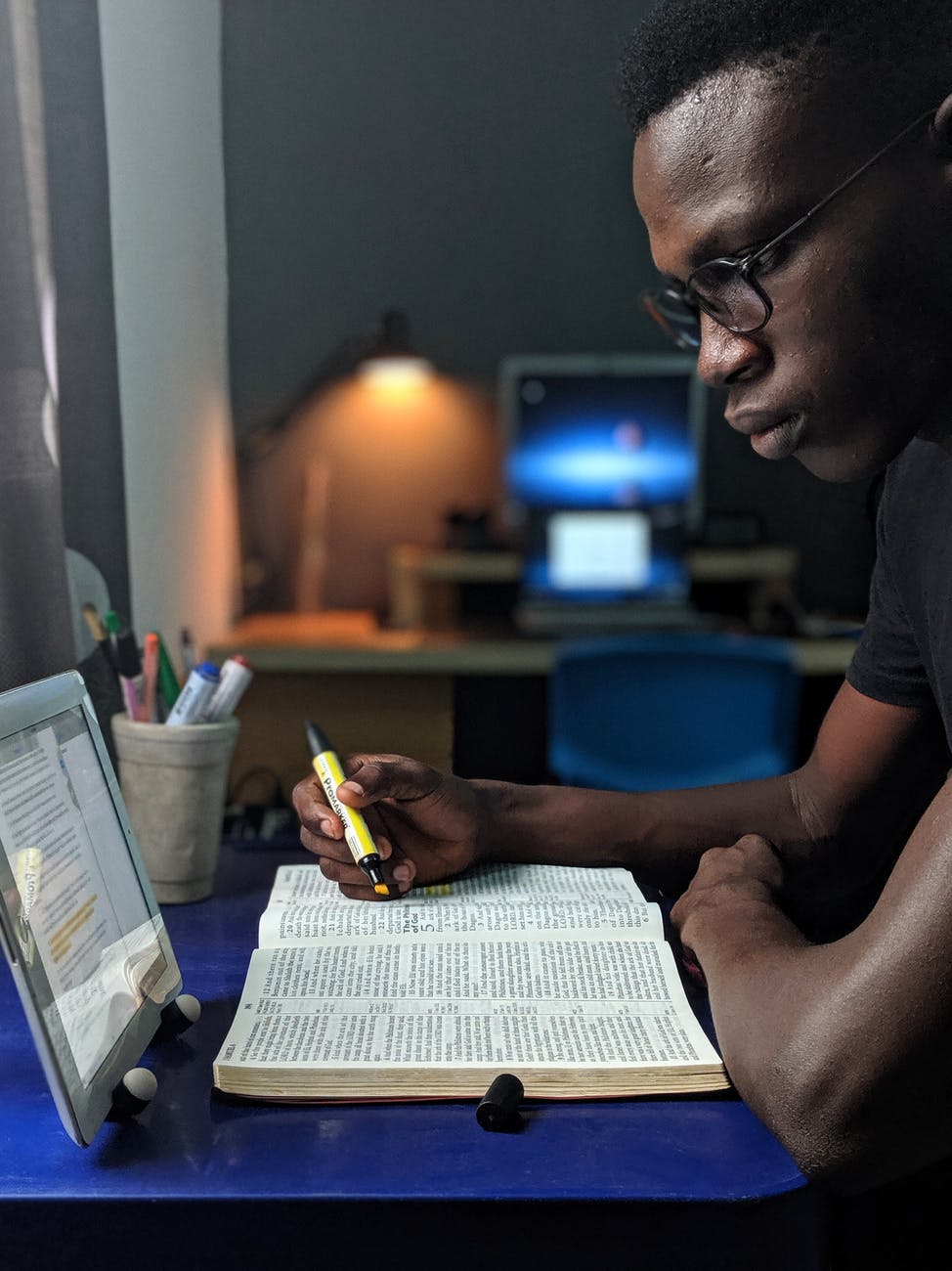
Photo by Oladimeji Ajegbile on Pexels.com

See, as Christians, we believe that we have free will – God gave us free will, which led to the fall of man, and the need for Jesus to come to forgive all our sins. Yet, God is all-knowing, and all-powerful, and knows what we are thinking before we even think it. So does that change things, for although we have free will, God knows what we’re going to do before we do it.

There are also Christians who believe that God is an interventionist God – basically meaning he is still active and changing things in the world, and others who don’t. I tend to lean towards the non-interventionist God in a way, believing that he’s still active in our lives, but not controlling such things as the weather. This would not sit comfortably with those Christians who believe that the floods in Queensland were a message from God.

So, do things happen for a reason? Yes and no. Some things happen because we cause them – cause and effect. I know that if I pour a beer over someone, I’m likely to get punched in the face. Or if I help someone out who’s struggling with something, I’m likely to get warm fuzzies. However, somethings happen because it’s the way the world is designed, and there’s nothing we can do about it. We can’t stop the wind blowing, the rain raining, or the sun shining (although sometimes I wish its UV was a little less potent to my skin). What we can do is control how we react to these situations. Do we want to use natural disasters as an excuse to judge people, or do we want to use them as a catalyst to spark Christian action, helping those we do not know?

Postaday2011 links

A Christian Gamer’s Guidelines

I’ve been thinking more about the post I wrote a little while ago entitled “A Christian Gamer” where I walked through some of the issues I was being challenged with at being a Christian, and a gamer, and how to reconcile those things. With most of the games that I play at LAN’s being violent games, how was I to reconcile that with my views as a Christian. And when you take into consideration the Salvation Army’s reasons to abstain from Alcohol, Cigarettes and Gambling because it harms other people (as well as yourself), how can I reconcile my gaming, which appears to harm some people?

As I have been thinking about it, I have decided to come up with some “Guidelines” – I don’t want to use the word Manifesto or Creed, as these are not necessarily beliefs. These guidelines are just some observations that I want to use to try to shape my gameplay into a more Christian role.

Firstly, I would call my beliefs Moderate to Liberal. I don’t believe that we should abstain from everything that is not in the bible. I feel that there are Christians who take what is written in the bible so seriously that it scares people away from Christianity. Yes, I believe the Bible is the word of God, and that we should read it, and embrace it, and know it fully (something that I am still striving to achieve), but I also believe that we need to read the bible in context – in the context of when it was written, and the context of how we apply it today. I believe that in reading the bible in the context of today, how we apply it to our lives, we must be willing to step back, and take a more general look at the meaning of the passage, of the chapter, of the book, and of the Bible in general.

With that in mind, here are my guidelines.

1. Get my priorities sorted.

Love the LORD your God with all your heard and with all your soul and with all your strength.

Deuteronomy 6:9

I have heard, in relation to becoming a priest, that your priorities should be “God First, Family Second, Church Third.” This way, you serve God, you provide for your family, and then you look after the church. It’s a matter of determining where your priorities lie, what you feel is important. This is reflected in the scripture above. Jesus said that this was the great and first commandment. Love God first, then your family (Ephesians 5:25; Proverbs 22:6), then the Church (Galatians 5:13). For me, while I enjoy Gaming, it shouldn’t come at the expense of more important things. If I haven’t spent time with God today, then surely my time can be spent better than playing some game. If I haven’t spent time with my family, then gaming surely can wait.  This then leads onto the second guideline:

2. Don’t  Get Obsessed

You shall not make for yourself an idol in the form of anything in heaven above or on the earth beneath or in the waters below. You shall not bow down to them or worship them; for I, the LORD your God, am a jealous God

Exodus 20:4-5a
I have heard all too many stories of people becoming obsessed with games, particularly MMORPG’s such as World of Warcraft. I have even heard of Game Addiction Rehab Clinics in places such as Amsterdam. If I am not careful, I could be drawn into these games, and not realise it. Therefore I must remain vigilant so as not to become obsessed. Exodus 20:4 talks about false idols. In the context of the day, these were idols, statues that the people would make and worship, believing them to be gods. But in today’s society, our idols are much more secluded in nature. We don’t have physical golden idols, but we do have TV, computers, magazines, celebrities – things that take our focus away from God. The first guideline helps with this, ensuring that I remain focused on God and Family. I will never rush home to play my game (this includes searching for a computer because I forgot to water my Farmville farm – which won’t be a problem as I don’t play that).

3. Game in Community

Now we ask you, brothers, to respect those who work hard among you, who are over you in the Lord and who admonish you. Hold them in the highest regard in love because of their work. live in peace with each other. And we urge you, brothers, warn those who are idle, encourage the timid, heal the weak, be patient with everyone. Make sure that nobody pays back wrong for wrong, but always try to be kind to each other and to everyone else.

1 Thessalonians 5:12-15
One of the great things about gaming is that it brings you into a community. For me, I have a group of about 4-5 friends that meet up semi-regularly to play. For some of these guys, they might not go to Church regularly. By gaming with them, it opens up opportunities to chat with them about Christianity, and also to maybe invite them along to church one day. Gaming by yourself is fun sometimes, but that community aspect is one of the real joys of gaming. At the end of Paul’s letter to the Thessalonians, he gives the final instructions above. It all boils down to respect in your community. Verse 14 says “And we urge you, brothers, warn those who are idle, encourage the timid, help the weak, be patient with everyone.” For me, in relation to gaming, this verse is vital. For in community, we can chat to others about their issues, we can encourage the timid, be patient with everyone. We can make sure that nobody pays back wrong for wrong, and try to be kind to each other and to everyone else (Verse 15). It is in community that we can follow God’s word. Hence, when we game, as often as we can we should try to aim to do so in community.

This also goes into helping others make sure that they don’t get obsessed with their gaming. Remember, the reason why this issue spoke to me was because there are people out there who are affected by games. People who do get obsessed, who can’t distinguish the difference between a video game and real life. By gaming in community, we can look out for the signs of these people, and – as Paul writes – “help the weak,” we can help them through any issues that they have, either through a chat, through possibly bringing them to Christ, or through getting them in contact with people who can help.

Conclusion

As I said, these are by no means a manifesto or creed – just some guidelines. So I would encourage others to suggest things that I might like to include. I haven’t tackled in this edition what games to play, as I feel that by following the above guidelines that it’s not so necessary – but perhaps you disagree. Does “Thou shalt not murder” include killing in video games? Comment. Discuss. I’d love to hear your thoughts.

A Christian Gamer?

I’ll freely admit that I’m a bit of a nerd. Actually… a lot of a nerd. And what do nerds do to have fun with friends? Game. I’m what you would call a casual gamer – I don’t really play computer games all that often by myself, but will generally try to get to a LAN at least once a month with a few mates to have a gaming session. What we play at these nights are often an RTS – Real Time Simulator – such as Supreme Commander, Red Alert, or Warcraft 3 (if we’re feeling old school) and a FPS – first person shooter – such as Unreal Tournament 3, Left 4 Dead, Call of Duty, etc. We’re all mature gamers – I’m the youngest at 23 – and I don’t think that any of us would be affected by the violence of such games.

However, I’ve been challenged in my thinking just recently. It was all sparked by the refusing of classification in Australia of Left 4 Dead 2. I was discussing this with my mum, arguing that I felt we needed an R18+ rating for games, especially considering that the average age of gamers in Australia is towards the mid-20’s and growing older all the time. I was saying that the people of are affected badly by violence in video games are in the minority, and generally have some underlying mental illness. My mum then used an argument on me that I had used to help me understand some new commitments in my faith. Continue reading “A Christian Gamer?”