
Caring for People (Vision and Mission Part 3)

This is part three in my Vision and Mission sermons at The Salvation Army Devonport. View all of the sermons here. The reading for today was Luke 10:25-37.

For some strange reason, people seem to be on an unending quest to live forever. Some scientists believe that the first person to live to 150 years of age has already been born –they obviously never read about Methuselah. Some also believe that within the next two decades the first person to reach 1000 years of age will be born. From miracle pills to

The Holy Grail from Indiana Jones and the Last Crusade

miracle cups, people are on a never ending quest to be able to live forever.

So when we read this question from the lawyer, we can kind of understand. We want to find this everlasting life, this eternal life. And I can relate to him. He asks Jesus, “what must I do”. He wants to have something that he can go, right, that’s done, I’m good. Do this, and you’ll get this. Nice and simple. Complete this task, once it’s done, you’ll get eternal life.

But Jesus is never simple like that. And he does what Jesus does best – answers a question with a question. He turns the question around and says to the lawyer – what do you see in the scriptures. When you read God’s word, what does that tell you that you need to do.

And then the Lawyer says something incredibly interesting. He quotes the same two passages that we hear Jesus quote in the books of Matthew and Mark as the two great commandments. Here, Luke has turned it around, and has this Lawyer saying that this is what he’s got out of the torah – these are the two things that can be read. To Love God with everything you’ve got, and to love your neighbour as yourself.

Jesus responds positively, answering the initial question: do this, and you will live.

Who is my neighbour?

But the man thinks, this can’t be it. It’s not a task with a finite finish date. I can’t go and know when I’ve finished it. So he asks another question. “Who is my neighbour?” And Jesus responds with the parable of the Good Samaritan.

The problem is that we’ve lost a lot of what Jesus was trying to get through with this parable. So, if you’ll permit me, let me put a modern spin on this story.
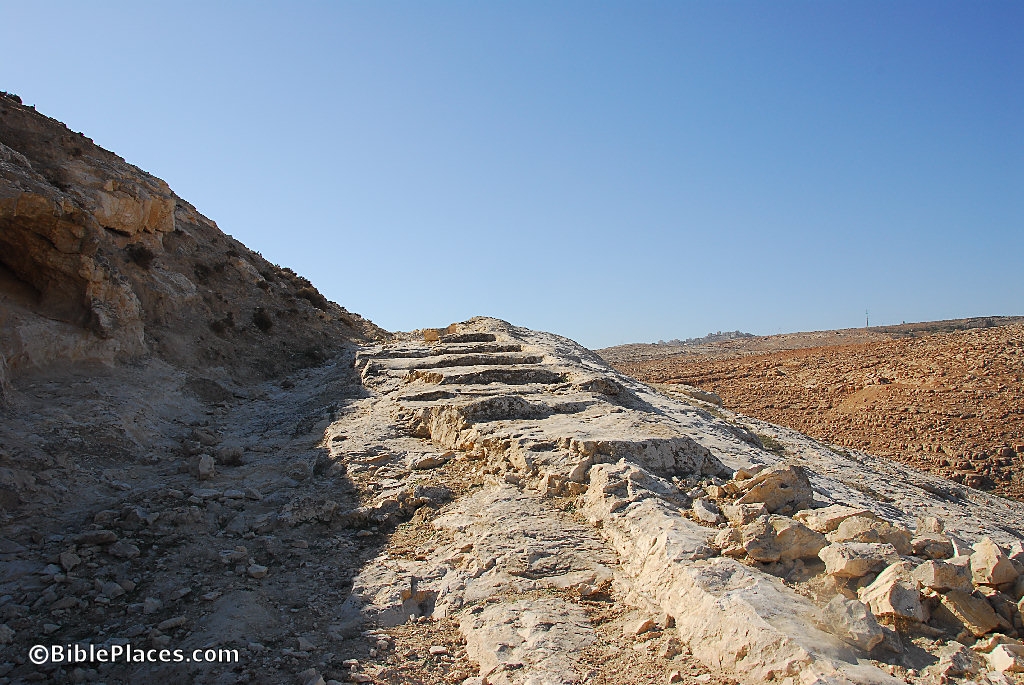
A Roman road from Jericho to Jerusalem

A man was going down from Jerusalem to Jericho, and fell into the hands of gang members, who stripped him, beat him, and went away, leaving him half dead.  Now, by chance, a member of the IDF was going down that road; and when he saw him, he passed by on the other side, thinking that it may be an ambush. So likewise a Rabbi, when he came to the place and saw him, passed by on the other side.

A Palestinian man
A Palestinian man

But a Palestinian while traveling came near him; and when he saw him, he was moved with pity. He went to him and bandaged his wounds, having cleansed them. Then he put him in his car, and took him to an inn and took care of him. The next day, he took out a day’s pay and gave it to the innkeeper and said, “Take care of him; and when I come back, I will repay you whatever more you spend.”

See, the Samaritans were the most hated group of people by the Israelites. They did not interact with each other, and they certainly didn’t touch each other – even moreso when one of them was hurt and bleeding. Travelling Jews would even take longer routes to avoid going into Samaritan land. So when Jesus described the actions of the Samaritan as the one to be held up as ideal, he really shocked a number of people.

Maybe your Samaritan is something different. Maybe it’s the Good Centrelink Employee. Maybe it’s the Good Boat Person. Maybe it’s the Good Politician. Maybe it’s the Good Christian. Whoever that person is, the actions that flow from that is what counts.

Go and do likewise

In Jesus’ day, it was thought that the priests and the Levites were the people that were good. They knew the law and they followed it. They knew that to touch someone who was bleeding would make themselves unclean. But for Jesus, these two commandments override everything else. So sure, remain clean, but not at the expense of loving your neighbour. Jesus poses a question to the lawyer and asks who was a neighbour? The lawyer can’t even bring himself to say Samaritan, so he says “The one who showed him mercy”, but he is the one that Jesus says to emulate in their behaviour.

So what are we to do? We must make sure that through our programs we are caring for every person that comes through our door. The way that care looks might look a bit different for each person , but we need to meet them where they are, meet their immediate needs, and minister to them in that way.

William Booth, founder of The Salvation Army, once said, “What is the use of preaching the Gospel to men whose whole attention is concentrated upon a mad, desperate struggle to keep themselves alive?” I guess that’s the whole idea behind the traditional Salvo saying of “Soup, Soap and Salvation” – you won’t save a man if he’s hungry and not clean. Indeed, there’s a theory in the Social Services called

Maslow's Heirarcy of Needs
Maslow’s Heirarcy of Needs

Mazlow’s Heirarchy of needs, which defines different levels of needs for a person to function in society. The basic theory goes that if one of the lower level needs aren’t met, a person can’t begin to process any of the higher level needs. So if someone’s worried about where their next meal is going to come from, there’s no point trying to convert them to Christianity. Instead, meet their immediate needs – get them some food.

Like the Samaritan in our parable, he didn’t try to convert him, or to seek out revenge against the bandits. His first action was to get the man to a safe place, then look after his wounds, and when he could stay no longer, he made provisions for his continued healing.

Similarly, while we are called as a church to go and do likewise, you in your life are called to go and do likewise as well. Jesus said that the love of neighbour was one of the two great commandments, and to be neighbourly, we need to show love and mercy to all that we meet, caring for their lives – both physically and emotionally, and living out the Gospel of Christ in our lives.

So go. Be like the Samaritan, and show mercy and compassion to all that you meet. Go and live life with your neighbours, whoever they may be. Get in along side them.

Jesus is alive! … so now what?

As has been my tradition, every sermon that I preach will be posted here. This sermon, Jesus is alive!… so now what?, was given at The Salvation Army Devonport on Sunday 27 April, 2014. The Reading was John 21:1-25.

In the church, today is traditionally known as low Sunday. After the hype and busyness (for the ministers at least) of the Easter Weekend, we feel a bit low. My dad’s a minister, and is looking after an Anglican church at the moment in WA. He reckoned he did about 16 hours of service over the four days. Another one of my Anglican Priest friends did 13 services in 8 days, and that included getting arrested for praying in the offices of a member of federal parliament. For the church, Easter is a busy occasion, so when it’s all said and done, we feel a bit low following it, and the stats generally go the same way. I’ve been following the stats here quite rigorously, and I can tell you that last year, you actually increased your attendance on low Sunday as compared to Easter Sunday, but the year before you followed the pattern correctly, and dropped off quite significantly. And that’s ok. We are all feeling down, and low, and the energy is gone. Add ANZAC day in, and I am certainly empathetic with those of you who are feeling low in energy today.

Going backwards

I wonder if how we’re feeling is a bit how the disciples were feeling. They had certainly been on a rollercoaster ride of emotions over the weekend. They start with the great disappointment of Jesus dying, followed by the excitement of him rising. But then they don’t really know what to do. They’re trying to take it all in, and process it all. So Peter, being the man of action that he is, hops up and says “Well, we can’t just sit around here all day. I’m going fishing.” And those that were with him head out and do the same.

Now, Simon – as he was known then, remember that Jesus changed his name to Peter – was a fisherman before Jesus came along. So for him – and for those that were with him – they were returning back to what they knew. They were going backwards.

So they go out fishing, and they don’t catch anything all night. They’re thinking, maybe we’ve lost our touch – it had been three years after all. So they head back to shore, and someone yells out, “Haven’t you got any fish?” It’s almost like he’s mocking them from the shore – fisherman, going out and not bringing anything back. Then, he yells out, “Why don’t you try the other side!”

Peter’s probably thinking “Yea right, try the other side.” That would be like me going to Des over at the shop, asking “Haven’t you had any sales” and then telling him to put the open sign on the other door, or to turn his A-Frame sign around. But they decide to do it anyway, and low and behold, they catch a large haul of fish – 153! Now, some people try to look for significance in the number, but there isn’t really any significance, apart from to signify that it was a true account, and that it really happened.

Then someone clicks – it’s the Lord. It’s Jesus! Simon Peter swims to the shore and greets him, and they share a meal together.

Reinstating

Now Peter must have been feeling a bit sheepish. But not as much as he would be with what happens next. Remember, when Jesus had been taken by the chief priests, Peter says three times that he did not know Jesus. Now, after breakfast, Jesus tackles Peter on this.

He says, “Simon, son of John, do you love me more than these?” Now there’s a few things to point out just in that question alone. First, note that Jesus has returned to Peter’s original name – Simon. That must have hurt, but that’s what Peter did. He returned to his old self by going back fishing. Second, there’s no indication as to what Jesus is indicating by “these” – he could be pointing to the fish, he could be pointing to the other disciples, we don’t actually know. But either way, Peter responds and says “Yes, Lord, You know that I love you.”

Now, we actually lose something here in the translation – and I try to avoid heading into the Greek because it can get boring and stuffy, but we need to understand that there are a few different words for love in the Greek language. There’s eros (ερος), which is the erotic love, and we don’t get a lot of that word in the gospels. Then there’s phileos (φιλεος), which is the love of a friend, and then there’s agapao (αγαπαο), which is brotherly or sacrificial love. So when Jesus poses the question, he uses the word agapao. But Peter responds with phileos.

Jesus asks again, using agapao, and again Peter responds with phileos. Finally, Jesus asks a third time, this time using the word phileos. At that point, Peter realises what he was missing.

So often through the Gospels, Jesus spoke to his disciples on a heavenly plane, that they just didn’t get, and would eventually break it down for them in terms they would understand. Here we get the same thing – Jesus is aiming for Peter to think higher, to think heavenly, but when it’s apparent that he can’t – not at that moment, Jesus comes to him, and meets Peter where he’s at.

Jesus still does that today. We’re tired. We’re exhausted. But Jesus gets that. We’re hurt. We’re sore. But Jesus gets that. We’re unsure about our faith. We’re not sure what to do with what we’ve heard over the weekend. But Jesus gets that. Jesus comes, and meets us, where we are, and says “Follow me.”

Going forwards

So Peter follows Jesus, and sees “the disciple whom Jesus loves” – thought to be John – following, and asks “what about him?” And Jesus turns to him and says “what is it to you what I do with him. You, follow me.” Jesus says, quite clearly, that we are not to concern ourselves with what Jesus is calling others to do, or to concern ourselves with how others are living. Instead, we are to focus in on what we need to do in order to follow Jesus.

Don’t concern yourselves with what others are doing, because their path is different to your own. You’re all individuals! Everyone comes from a different place, with different experiences, but Jesus’ call to everyone is the same – Follow me! From wherever you are, I will meet you there, and follow me! Don’t get distracted by what other people may or may not have to deal with, but instead, focus on what you have to deal with. The path may not always be easy – indeed, Jesus highlighted how Peter was to die because of following Jesus – but still we are called to follow him.

So today, are you going to allow Jesus to meet you where you are, and follow him? As we sing, you’re invited to come and to spend time in prayer, to meet Jesus where you are, and to seek out where he is leading you. Perhaps you’ve never met Jesus, but today you want him to come and to meet you where you are, and to invite him into your life and to say that you want to follow him. Someone will come and pray with you, and will support you through that. Or if there’s someone that you want to bring forward to pray with you feel free to do that as well, or even just to pray in your seats, but let’s sing, and meet Jesus where we are, and say “Yes, Lord, you know that I love you, and that I will follow you”

Being a Light to the Community

As has been my tradition, every sermon that I preach will be posted here. This sermon, Being a Light to the Community, was given at our Installation service at Devonport Salvation Army on Sunday 12 January, 2014. The Bible reading was Matthew 5:13-16.

I don’t know what you’re thinking about me right at the moment, but one thing that I can tell you is that I’m a bit of an odd person, and I like odd things. My wife won’t disagree here. I like Star Trek and Lord of the Rings, and I play musical instruments with strings, not brass. Before I went to the Training College, I spent 18 months in the Media and Communications department at the Uniting Church Synod office, where I did, amongst other things, a lot of looking at and editing photos. One thing that I learned to appreciate was the different types of light. Continue reading “Being a Light to the Community”

The Jesus Creed

As has been my tradition, every sermon that I preach will be posted here. This sermon, Jesus Creed was given at Fusion Youth Service at Waverley Salvation Army on Sunday 3 November, 2013. The Bible reading was Mark 12:28-34

“Which is the greatest?” It’s a question that is very common, to find out where you stand on certain important issues. Who was the greatest batsman? Well, you’ve got to go with the Don, but if you take him out, who was the greatest modern day batsman? Do you go with Ponting, or Tendulkar? Or who was the greatest Bond? Do you go Sean Connery, Pierce Brosnan, maybe Daniel Craig, or perhaps Linda? This question of the greatest goes a long way in telling us what the priorities of a person are, and whether they align with our own. Continue reading “The Jesus Creed”

The Faith of the Bikie

As has been my tradition, every sermon that I preach will be posted here. This sermon, The Faith of the Bikie, was given at Waverley Temple Salvation Army on Sunday 27 October, 2013. The Bible reading was Luke 18:9-14.

Honest question, right here and now: Who heard this story and thought to themselves, “Thank God I’m not like that Pharisee”? Continue reading “The Faith of the Bikie”

Who are your spiritual heroes?

As has been my tradition, every sermon that I preach will be posted here. This sermon, Who are your spiritual heroes, was given at Waverley Temple Salvation Army on Sunday 18 August, 2013. The Bible reading was Hebrews 11:29-12:2.

Who are your faith heroes? In the bible reading today, we’ve heard a few of the faith heroes that were of importance to the faith community that this epistle was addressed to. We’ve heard of Moses and of Joshua and Rahab. We’ve heard of Gideon, Barak, Samson and Jephthah – Judges of the early Hebrew tribes, and of David, the king, and Samuel, the prophet. We’ve heard all their actions attributed to their faith – by Faith, these great people did these things. These are people that they hold in high esteem in their faith, because of the things that they have done. Continue reading “Who are your spiritual heroes?”

The Requirements of the Lord

As has been my tradition, every sermon that I preach will be posted here. This sermon, The Requirements of the Lord, was given at Mornington Sanctuary Salvation Army on Sunday 5 May, 2013. The Bible reading was Micah 6:1-8. It was recorded, and is available for podcast download through iTunes or directly.

So I’m going to ask a question, and as a bit of warning, If you put your hand up I am going to ask that you prove yourself and answer it – this is not a hypothetical question. So, Who is able to name all ten of the Ten Commandments? No-one? I think we’ve got a bit of work to do here. Ok, so how about something a bit easier – what book and chapter is it found in? Did you know that it’s actually found in two places – in Exodus 20 and Deuteronomy 5. Anyway, here are the 10 commandments.

  1. You shall have no other gods before me
  2. You shall not make for yourself a carved image, or any likeness of anything that is in heaven above, or that is in the earth beneath, or that is in the water underneath the earth. You shall not bow down to them or serve them
  3. You shall not take the name of the Lord your God in vain.
  4. Remember the Sabbath day, to keep it holy.
  5. Honor your father and mother.
  6. You shall not murder.
  7. You shall not commit adultery.
  8. You shall not steal.
  9. You shall not bear false witness against your neighbour.
  10. You shall not covet your neighbour’s house.

And then it goes on to list a few other things that you shall not covet.

What do you notice about the 10 commandments? There’s a lot of “shall nots”! In the New Living Translation of the bible, they actually translate the phrase as “You Must Not” and it appears 10 times in their full text of the ten commandments.

Now, I don’t know about you, but for me I find it hard to do something when I am told that I “must” do it, even if I think it’s the right thing to do. I would rather do it my own way, and discover the mistakes myself.

When we’re told that we’re not allowed to do something, or that we shouldn’t do something, it often makes us want to do it more. Tell a child not to touch the kettle because it’s hot, and they’ll want to touch it even more. Tell a teenager that they’re not allowed to go out, and sure as anything they’ll find a way to get out.

god people usOk, let’s try something different? What are the two greatest commandments? We read about them in Matthew 22:34-40.

Hearing that Jesus had silenced the Sadducees, the Pharisees got together. One of them, an expert in the law, tested him with this question: “Teacher, which is the greatest commandment in the Law?”

Jesus replied: “’Love the Lord your God with all your heart and with all your soul and with all your mind.’ This is the first and greatest commandment. And the second is like it: ‘Love your neighbour as yourself.’ All the Law and the Prophets hang on these two commandments.

As a former Anglican, these two commandments are a lot easier to remember, as they are read in 90% of the Sunday services (the other 10% they read out the full 10 commandments). But they are still easy to remember

They are also easy to apply – Love God, Love Others, Love yourself.

Micah 6 – how have I burdened you?

In Micah 6, the Lord asks his people what he has done to them to burden them. Takes place in a metaphorical court case argument. He asks how he burdened them, and follows that with an account of salvation – He brought them out of Egypt, redeemed them from slavery, highlights the stories of Moses, Aaron and Miriam, Balak and Balaam, and their journey from Shittim to Gilgal.

The Lord has done many wonderful things for us – most of all, he sent Jesus to redeem us from our sin, so that we may live in relationship with him. Yet we often still turn Christianity into a burden. You must not do this. You must not do that. We often do it in the Salvation Army ourselves – When someone asks you about soldiership, what do you say? Well, we’re not allowed to drink, smoke or gamble. Is that really what we want setting us apart – what we’re not allowed to do? We need a paradigm shift – from what we’re not allowed to do, to what we’re required to do.

The Lord Requires us to Do

Now we hear in this passage what the Lord requires of us. Now for some that might be a great word, but the Hebrew word can actually be translated a number of ways. It can also mean to seek, or to ask for, or to practice, study, or seek with application. Basically, what does the Lord ask for us to practice and apply to our daily lives? It’s a much nicer way of putting it, and something that is practical and easy for us to remember, and to put into our daily lives. And there are many who are living out the Micah 6:8 promise who we can turn to for inspiration.

Act Justly

There are a number of examples of people who we can model our lives on who have acted Justly, or fought for justice. You could very well argue that the Salvation Army’s founder, William Booth, was a prime example of someone who acted justly, seeking justice for the oppressed and forgotten of society. Or what about William Wilberforce, who fought against the injustice of slavery.

Martin Luther King, Injustice Abortion The man who comes to my mind when I think about justice is Martin Luther King Jr. The way that he fought against injustice within the American political sphere cemented his place in the American history books, and the hearts of the people. But he deserves our recognition as well, as a Christian man who acted justly. He saw an injustice, and he fought against it in a manner that was completely becoming of a Christian – he did it in a prophetic, non-violent style. What I mean by that is that his protests, and his speeches, presented a vision of what could be, a better way of doing things. In all these things as well, he was non-violent. He did not lift a hand in anger against those who oppressed him, instead he rallied public opinion (as did the organisations that he represented), and forced the politicians hands until there was nothing that they could do but right the wrongs of their nation.
If we were to look at the three men I’ve mentioned, and how they lived their lives, we would see that they have all acted justly through their lives. Yes, on the large-scale, but it is through these men that we can see how to act justly in our own lives – to treat everyone with respect, no matter their background, and to fight for the better treatment of the least, the lost and the last to the best of our abilities.

Love Mercy

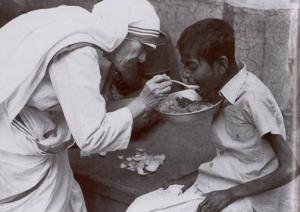
mother-teresa-feedingThe second part of Micah 6:8 has also often been translated as to Love Kindness, and when I think of mercy and kindness, I think of Mother Teresa. This wonderful woman of God showed kindness to everyone she met. She practically showed kindness and mercy to “the hungry, the naked, the homeless, the crippled, the blind, the lepers, all those people who feel unwanted, unloved, uncared for throughout society, people that have become a burden to the society and are shunned by everyone.” Through setting up her order, the Sisters of charity, she founded hospices that cared for the lowest of the low. One of the criticisms leveled against her was that she was friendly to dictators, and while we may say she could have lobbied for justice better, she did show kindness to everyone she met, regardless of their background.

It can be hard, but this is something that is very practical that we can do in our own lives. From things as little as offering your seat on the bus to someone else, or making sure you tip your barista, to inviting your neighbor over for dinner when you know that they’re struggling.

Walk Humbly with your God

When I first started putting together this sermon, I thought that i would put in a joke about how I did a Google search for humble Christians, but it returned no results. How sad it was when i actually did the search, and I got no answers. The thing is that the most well-known Christian figures are anything but humble, due to their being in the spotlight so much. On the flip-side  the truly humble Christians are there doing God’s work often completely unnoticed, and hence don’t show up in Google searches.

I think of one woman from my Church, who is always there willing to work and do whatever is needed, and rarely takes and thanks for the work. I’ve never heard a nasty word from her mouth, instead, the words of someone who is truly humbly walking with God.

Likewise, I think of my good friend, an old retired priest, who continues to serve his church through a prayer and healing ministry, and a wonderful widows and widowers ministry. So humble is his approach, that I’m sure there are many other things that he is doing that i don’t even know about.

2013-04-26 15.49.06

Being humble is probably the thing that we find the hardest as Christians  A lot of that is probably due to us needing to put ourselves apart and put God and others first. It’s not something that we like to do, but it is something that God has asked of us, and as such we need to do something about it.

So tonight, I’m asking you to commit to yourselves living out Micah 6:8, however that looks to you. Commit to acting justly, treating everyone with respect no matter their background. Commit yourself to loving Mercy, showing kindness to everyone. And finally, be humble in your walk with God – make everything you do be to the glory of God, not the glory of you.

Do not doubt, but believe

As has been my tradition, every sermon that I preach will be posted here. This sermon, Do Not Doubt, but believe, was given at Rosebud Salvation Army on Sunday 7 April, 2013. The Bible reading was John 20:19-31.

This past week has been a bit of a shock to the system. We came down on Maundy Thursday, got straight into things with the Haagidah dinner, Good Friday, Dawn Service and Easter Sunday. Then that afternoon, we headed back up to Melbourne for lunch with Liesl’s family, then we stayed in Melbourne to do some study on Monday, before heading down that night to be back here for the 8am prayer meeting, and starting our ministry here with Janette and Geoff. And already, I must say, that they’ve been great, and have shown us a lot already in this short time, but I do have to say that my head doesn’t really know where it is right now.

In the Church’s calendar, today is the first Sunday after Easter, and while through Easter, we focus in on the Death and Resurrection, it is this period that the church can really look forward to. We are in the time of remembering Christ’s days on earth post resurrection, and everything that means to us. Christ may have risen last Sunday, but he lives on in the hearts and the lives of those who worship him in his church. There are, however, so many who live just for the Big holidays. “CoE Christians” they’re sometimes called – Christmas and Easter. The two biggest days in the Church’s calendar, where we also get the largest congregations. Now I’m new to the Salvos, but I’m sure the same principle applies. In the Anglican Church, the Sunday after Christmas and after Easter were always known as Low Sunday. After the massive high of Christmas and Easter, the Sunday after was traditionally when we would get our smallest attendances of the year. Christmas, I can understand that. But Easter – the story isn’t over yet. Jesus is Risen! But that’s not the end of it. Christ rose from the Grave, but he hadn’t finished here on earth, and even though he had to ascend into Heaven, he left behind the Holy Spirit to continue the work here on earth.

Today we’re looking at a reading that takes part firstly still on that Easter Sunday, then on the following week. Jesus has risen – but he still has work to do. But just like my week this week, the Disciples are not quite sure where their heads are at right at the moment.

Despite the knowledge, there’s still doubt

The disciples had a really crazy day. It started with their teacher, that they had devoted three years of their lives to, being dead. The one who had taught the revolutionary message of a new way, of a new kingdom, the one they believed to take this new kingdom to fruition, was dead. The seed of doubt had been planted. Then one of the women, Mary, had come saying the body had been stolen. Peter and the beloved disciple confirmed that the body was gone. The seed of doubt grew – had someone stolen the body? Had something miraculous happened? Even when Mary returned saying that she had seen Jesus, they still weren’t certain.

They met that night, ten of the apostles, and a number of disciples, to discuss the events, and to worship. They locked the door, because they were still fearful as to whether the Jewish leaders still had it in for them or not.  They knew Jesus’ teachings, they knew the events of that day so far, yet when Jesus appeared, he still deemed it necessary to show his wrists and his side to show where he had been pierced. They then realised what had happened and they celebrated.

Thomas had even more information than the disciples who were there that night. Thomas wasn’t at the meeting that night, and despite being told by the disciples that Jesus appeared in the room with them, he still couldn’t bring himself to believe. This was a big thing for Thomas. Earlier – on the way to see Lazarus’ dead body, Thomas had exclaimed “Let us also go, that we may die with him.” This was a statement of blind devotion to Jesus – he was willing to follow him even to death. Yet when doubt had crept in, unless he saw with his own eyes, he couldn’t be brought back to that faith.

When there is doubt, faith flourishes

It’s so easy for us to have doubts these days. There is so much pressure from the world to have us doubt our faith, or for us to have to prove it beyond doubt. Even last Sunday, Easter Sunday, I was watching on Sunrise a creationist who was willing to put up $10,000 for an evolutionist to disprove the bible in a court – even if this guy wasn’t the most convincing of creationists himself. People want us to prove, beyond all doubt, that Christ is saviour. The problem comes is that Jesus himself said that there would always be a need for some doubt, because where there is doubt – that is when faith can flourish.

Jesus says, “Blessed are those who have not seen and yet have come to believe.” We have not seen with our own eyes. We can read the stories, we can study the biblical accounts, we can know our own accounts of God in our lives, but there will always be people who try to explain away those experiences. This is where faith comes in. In Hebrews 11:1, Paul writes that “faith is confidence in what we hope for and assurance about what we do not see.” Though we did not see Christ crucified and risen, we have faith that this embodies our hope – that on the cross Christ paid for our sins, and in the resurrection God accepted that payment.

When we embrace this doubt, that is when our faith can grow. The doubts that we may have actually provide the space for our faith to grow, and when that happens Jesus provides us with a rich reward.

With faith and belief, comes life

At the end of this passage comes a little epilogue from the writer of the fourth gospel. Verse 30-31: “Now Jesus did many other signs in the presence of his disciples, which are not written in this book. But these are written so that you may come to believe that Jesus is the Messiah, the Son of God, and that through believing you may have life in his name.” The signs that are written in the Gospel of John are written so that we may come to believe that Jesus IS the Messiah. When we have faith in that, when we come to believe, the result is that we are given life in Jesus’ name.

Because of what Jesus did on the cross, we have a guarantee that tells us that we are free. We have a new life, where we can live in the hope that Christ has paid for our sins, and we no longer need to live in them. The guarantee that we have in Christ’s resurrection tells us that we are free – so let’s live that life! Let’s give up the sins that we hold on to, because we’re holding onto a bit of doubt. Jesus commissioned his disciples with the words “As the Father has sent me, so I send you.” God sent Jesus to bring people into a relationship with him, to know him, and to know the life that he gives. As his disciples, we are commissioned with those same words – we are sent, and the Father sent Jesus. We are sent to spread his message, and to tell others about what Jesus has done in our lives, whether that’s through words, or through actions, or just through our lives.

Live the life that Jesus gave, and share your faith

Some of you may know that I have just recently come back from Manus Island, working in the Refugee Processing Centre there. In our role there, The Salvation Army is not allowed to proselytise, however despite this I had many opportunities to share my faith. This was just through living life with the community members, and when they asked why I did the things that I did, it all basically comes back to one answer – Because of Christ, who lives in me. As an Anglican, evangelism was a difficult thing for me – we weren’t very good at it, and I never saw myself as gifted in it. How surprising it was in my first college review for one of the staff to say that they saw in me a strong gift of evangelism. See for me, evangelism isn’t just telling people about Christ, and seeking converts. It is living the life that Christ has asked of us, and being open for the opportunities when they arise.

Isn’t that, after all, what Jesus did? He lived the life that God had sent him to. He engaged in the community, and lived according to God’s will. Because of the way he lived, people were attracted to him. That’s what he meant when he says “As the Father sent me, so I send you.” So start living the life that Jesus has called you to, and living out the faith in your everyday life. Jesus died that we may have new life. Let’s spread that new life to everyone that we meet.

What is it that you’re looking for?

As has been my tradition, every sermon that I preach will be posted here. This sermon, What is it that you’re looking for, was given at Arthurs Seat as part of the Easter Dawn Service for the Rosebud and Mornington Salvation Army on Sunday 31 April, 2013. The Bible reading was John 20:1-18.

Who is it that you’re looking for? It’s a question that Jesus posed to Mary, but it’s one that is apt for us today as well. Who is it that you’re looking for? Are you looking for chocolate eggs or hot cross buns? Are you looking for the faith you once held as a child, or at your first conversion? Or maybe at this time in the morning, you’re looking for the nearest barista? Continue reading “What is it that you’re looking for?”

The gifts that we bring to offer our King

As has been my tradition, every sermon that I preach will be posted here. This sermon, The gifts that we bring to offer our king, was given at the Church of Christ Wembley Downs on Sunday 6 January, 2013. The Bible reading was Matthew 2:1-12.

Annabelle in Wrapping PaperToday is the last day of our Christmas season. I hope it’s been a good season for you. It’s been a very special season for me, as it has been Annabelle’s first Christmas, and it was very special to be able to spend it here at home. But that presented itself with some other challenges. Everyone wanted to give Annabelle lots of presents, but we had to remember that everything that we received, we had to make sure that we could fit it all in our suitcases to take back to Melbourne. Thankfully we didn’t receive many large presents, but we’re still hoping that we’ll come in under our baggage allowance. Continue reading “The gifts that we bring to offer our King”