God’s Gifts

As has been my tradition, every sermon that I preach will be posted here. This sermon, God’s Gifts, was given at The Salvation Army Rochester on Sunday 14 February, 2016. The Reading was John 21:1-23.

Societies Contrasting messages

As I’m sure you’re aware now, I turn 30 today. And it’s with these big birthdays that you start thinking about your life, about making sure that you’re doing things that you should be doing. So earlier this year, I went to get a skin check, and you probably saw me with a bandage on the back of my neck where I had a biopsy done. All clear, which is good, but it was a bit of a wake up as well. I want to make sure that I’m around for as long as I can be for my kids – but my word is the world a tough place to live in. Continue reading “God’s Gifts”

God’s Big Reveal

As has been my tradition, every sermon that I preach will be posted here. This sermon, God’s Big Reveal, was given at The Salvation Army Rochester on Easter Sunday 27 March, 2016. The Reading was John 20:1-18.

I love a big reveal

Liesl and I love watching – when we remember that it’s one – we love watching this show on ABC2 called Penn and Teller’s Fool Us. It features two Magicians, Penn – the tall one who does all the talking, and Teller, the one who doesn’t speak. They have a big Las Vegas show, and through this TV show, they feature a whole heap of magicians who come on and perform a trick. If they are able to fool Penn and Teller, that is, if they aren’t able to figure out how the trick is done, then they win an opportunity to be the warm up act for their Las Vegas show.

Now magic is all about the big reveal. The showing of the box being empty. The showing of the girl sawn in half. The showing of the card that you signed being found inside the walnut which was inside the egg, which was inside the lemon. And I love it, because it gets you thinking – how did they do that? Continue reading “God’s Big Reveal”

Jesus invites us to a party

As has been my tradition, every sermon that I preach will be posted here. This sermon, Jesus invites us to a party, was given at The Salvation Army Rochester on Sunday 6 March, 2016. The Reading was Luke 15:1-3, 11-32.

We’re fine with equality so long as we come out on top.

Now, I’m hoping that you will appreciate my jokes a bit more than Liesl does, but I’d like to start off with a joke today. The story goes that this is an old Jewish story. There was a hardworking farmer, and the Lord appeared to him and in response to his hard work and faithfulness granted him three wishes, but with the condition that whatever he wished for, the Lord would give double to his neighbour. The farmer, scarcely believing his good fortune, wished for a hundred cattle. Immediately he received one hundred cattle and was overjoyed until he saw that his neighbour had two hundred. So he wished for a hundred acres of land, and again he was filled with joy  until he saw that his neighbour had two hundred acres of land. Rather than celebrating God’s goodness, the farmer could not escape feeling jealous and slighted because his neighbour had received more than he did. Finally, he stated his third wish – that God would strike him blind in one eye. And God wept. Continue reading “Jesus invites us to a party”

Be part of God’s Family

As has been my tradition, every sermon that I preach will be posted here. This sermon, Be part of God’s Family, was given at The Salvation Army Rochester on Sunday 14 February, 2016. The Reading was Romans 10:8b-13.

Beard, Mates, Family

Ben - Before and After
Ben – Before and After

You may notice something is a little bit different about me today. That something appears to be missing. Now, it’s not just because I was tired of Davey pulling at my beard, or that I wanted to look even younger. No, the reason that the beard came off is much more meaningful to me.

I’ve got a few really close mates. We’ve been mates since high school, when we all went to the same church. We’ve been through our ups and downs together, and through it all, we look out for each other. One of my mates, Christian, or CJ as he’s more commonly known, recently had a lump removed which was making him sick. The biopsy results came back, and he has commenced a treatment of preventative chemotherapy – which, if you’re have to have Chemo, is probably the best type to have. Now one thing that defines CJ is his facial hair. He always has some facial hair. Sometimes it’s a goatee, sometimes is a rough and wild bushman’s beard. The only time he’s ever bare is November 1st, when he shaves it all off to grow a moustache for Movember. So now, because of this treatment, he’s had to shave his beard off. Continue reading “Be part of God’s Family”

E-mail to Brett Whiteley, MP re Humanitarian Intake

Hi Brett,
I write to you in regards to your suggestion to quarantine the increase of humanitarian refugees to Christians (and other persecuted minorities) from Syria and Iraq. While I do commend the increasing of the humanitarian intake, and do recommend that you continue to fight for this, I must question the limiting of it to Christians.
As a former Pastor, I am sure you are aware of Jesus’ parable of The Good Samaritan. It has much to tell us about being hospitable, and being neighbourly. I’m sure I’m not telling you anything new in how the Jews and the Samaritans weren’t exactly on the best of terms. You might even suggest that the customs around being separate could breed the fear of the different and unknown that is similarly striking around Australia at the moment. So it is striking that it was the Samaritan, not the Priest or Levite, who helped the Jew who had been attacked by bandits. And in Luke 10:37, in response to Jesus’ question of who acted like a neighbour, even the Lawyer couldn’t bring himself to say that it was the Samaritan, instead saying “The one who showed him mercy.”
This is what being a neighbour is about. This is what being a Christian is about. Even though the Samaritan may not had the same religion as the Jew, or agreed about the same things, when he was in trouble, none of that mattered. The only thing that mattered was helping those who were not able to help themselves.
So with your announcement, you are suggesting that we protect our own, and not look after those who are different. You are effectively saying that as a nation, we should discriminate based on religion – that those who might be Muslim and fleeing persecution, fleeing a war zone, are less deserving of our protection than a Christian. And that goes right against what Christ taught. Christ teaches us that we are to love all, no matter of their ethnicity or religious identification.
So Brett, I ask you to keep fighting, and being Christ’s light in the parliament. But remember that Christ taught us to love all people, and it doesn’t matter who they are, what they’ve done, where they’ve come from, why they’ve come, or anything else. We are to show love to them, to be hospitable to them, and to be neighbourly to them.
With thanks,
Ben
This e-mail was sent to Brett Whiteley’s office on 7 September, 2015. He must have been waiting for responses, as this came back very quickly:

Thanks Ben for your response.

I hear your concerns and encouragement to consider widening the net so to speak.

As I have said previously the role of an MP is often one of balancing all aspects of the debate.

If we want to carry the community with us on an increased humanitarian intake we need to hear their thoughts and concerns as well.

Over the last few weeks I have held numerous community meetings. It is clear that there is not community support for a blanket intake.

I welcome your input.

Regards

Brett

There is nothing you can do that will stop God from loving you

I believe we all know that I am a bit of a geek… and a geek who loves Star Trek. So I hope you’ll forgive me when I say I’d like to show you a clip from Star Trek. Let me set the scene. Khan has set off the Genesis machine, after a battle with the Enterprise. The Enterprise is damaged, and can’t jump to warp speed to escape. Spock hears this, and heads into the radiation filled warp chamber, and fixes the warp drive, knowing that it will kill him. They escape, then Kirk is called down to the engine room.

https://www.youtube.com/watch?v=dhcR-w-56tA

wrath of khan“I have been, and always will be, your friend.” It’s possibly one of the most famous of Star Trek quotes. And it got me thinking – that quote kinda sums up how God feels towards us. He has been, and always will be, our friend. And as I was reading this passage, that’s really what I could see – that no matter what, God has been, is, and always will be our friend.

The thing is that we often don’t recognise that. We say that we can’t possibly have God’s love after the things that we’ve done. There are things that I’ve done in my life that I’m deeply ashamed of – surely God can’t love me knowing that I did that.

The passage we heard of today tells of the prophet Jonah taking God’s message to the city of Nineveh. That message was “Forty days more, and Nineveh shall be overthrown!” But what do we know about Nineveh?

Well, we actually know a fair bit. Nineveh was founded by Nimrod, the first on earth to become a mighty warrior. It was condemned by Zephaniah for its arrogance and forcast for destruction. Zephaniah 2:13-15 tells us that Nineveh will be made into “a desolation, a dry waste like the desert,” where “Everyone who passes by it hisses and shakes the fist.” In the book of Nahum, which is all about the destruction of Nineveh, we read Nahum describe the city as the “city of bloodshed, utterly deceitful, full of booty – no end to the plunder!” By all accounts, Nineveh was evil incarnate, and deserved to be destroyed.

And from what we read as well, we can see that people weren’t willing to show God’s love to Nineveh, either. You can see Zephaniah prophesied against it, and Nahum is a whole book celebrating its destruction. When Jonah is told to go and bring a message to Nineveh, he runs away, he doesn’t want to go there. And we read his reason why in chapter 4, “Is not this what I said while I was still in my own country? That is why I fled to Tarshish at the beginning; for I knew that you are a gracious God and merciful, slow to anger and abounding in steadfast love, and ready to relent from punishing.” Jonah didn’t want to go tell Nineveh about God’s message because he knew God wouldn’t destroy them.

You look at that and you can see that we do both things. We put ourselves in boxes, and say that we don’t have the right to deserve God’s love. The things we’ve done are so bad that God couldn’t possibly love us.

But we also do the same thing as Jonah. That person over there, you don’t want him God. Don’t you know what he’s done? He’s a liar, a cheat, he does this, he is that. Surely, you don’t want Him God.

Yet let’s look at how Nineveh, that city of bloodshed, that despised, hated city, who is evil incarnate, is described in the book of Jonah.

  • 1:2 “Go at once to Nineveh, that great city”
  • 3:2 “Get up, go to Nineveh, that great city”
  • 4:11 “And should I not be concerned about Nineveh, that great city”

And you know what – each description there? That’s God speaking to Jonah. God describes Nineveh as a great city. And despite of everything you’ve done, God describes you as a great person.

We can repent and turn back to God

But just because we can be assured that no matter what we do, God loves us, doesn’t mean that we can do anything we want. God still sent a message to Nineveh and that message had a threat of destruction in it. God gave them 40 days, and if nothing happened then Nineveh would be overthrown. So what does Nineveh do? Firstly, the people believed God. The message is shown to us and the first thing we must do is believe.

Secondly, they acted. They proclaimed a fast and everyone put on sackcloth – an act of repentance. When news reaches the King, even himself covered himself in sackcloth and ashes, and says “All shall turn from their evil ways and from the violence that is in their hands. Who knows? God may relent and change his mind; he may turn from his fierce anger, so that we do not perish.”

While we may have done bad things in the past, we are always able to stop, to repent, turn around and go in the direction that God is calling us.

We can live in the love of God

And what is that direction? We read in a few different places what God requires of us. In Micah – the book after Jonah – we read “He has told you, O mortal, what is good: and what does the LORD require of you but to do justice, and to love kindness, and to walk humbly with your God?” In Matthew, we read Jesus tell a Lawyer what the greatest commandments are: “You shall love the Lord your God with all your heart, and with all your soul, and with all your mind.” This is the greatest and first commandment. And a second is like it: ‘You shall love your neighbour as yourself.’”

That’s really what it all boils down to. When we repent, and accept God’s forgiveness, we then start living as Christ calls us to live. To love God humbly, with everything that we have. To love others, showing kindness to them and ensuring that we have justice for all. And to love ourselves – because how can we love others if we do not love ourselves?

Accept God’s love in your life, and offer it to others

So today, I invite you to accept the fact that God loves you. There’s nothing you can do to change that. Nothing you can do will change the fact that God loves you, and loves you so much that he sent his son to die for your sins. Just as Spock sacrificed himself, so that the rest of the ship could live, so Christ sacrificed himself so that all who believe in him will live. It’s Christ, there on the cross, saying “I have been, and always will be your friend.” So how will you respond to God’s love? Will you repent of your sins, and turn to follow Christ and how he’s calling you to live – loving God, loving others, and loving yourself? Will you offer that love to others, knowing that God’s love is available for all?

I invite you to come and respond to God’s love here today. While we do that, we have this song that says “Lord, I come, I confess” – we need to confess to God of our sins. “Without you I fall apart” – we can’t do anything unless we have Christ with us. “You’re the one that guides my heart” – when we’ve confessed, Christ guides our heart into right action.

While we sing, you’re invited to come and confess to God, to come and repent of your sins. Maybe you’re holding onto something that’s stopping you from fully accepting God’s love. Maybe things you’ve said have stopped others from coming to accept God’s love. Maybe you just want to come forward and pray. Someone will come pray with you, or you can bring someone with you if you prefer. But this is your time, to accept the love of God that’s always been there, and turn around and follow Christ.

https://www.youtube.com/watch?v=9eX5BeXkNZU

Don’t get stuck in the room

As has been my tradition, every sermon that I preach will be posted here. This sermon, Don’t get stuck in the room, was given at The Salvation Army Devonport on Sunday 23 November, 2014, in our first Sunday back in our building following renovations. The Reading was John 20:19-23

Who knows what next Sunday is, in the Church’s calendar? That’s right, the first Sunday of Advent. Hands up, who puts their Christmas Decorations up on the first Sunday in Advent? And who puts them up on December 1? And who’s got them up already?

Here’s a trickier question – who knows what today is, in the Church Calendar? Today, in the Church Calendar, is what’s known as Christ the King Sunday. And it’s this day that confused me for a long time with the set readings for the day.
If you don’t know, many churches use what’s called a lectionary, which is usually a three year cycle of readings that they will use for their services. There’s a few different ones around, but for the most part – particularly for the high feast days, they will have the same, or similar readings. And this day is one of them, where they will usually have a story related to the crucifixion.
Now, I never really got that until recently. It seemed to make no chronological sense – we were right about to get into Advent, the period of time where we prepare for Christmas, and all of a sudden, we’re brought back to Easter.
I didn’t get it for a long time, until a realised that – through the lectionary – we were being reminded that the whole purpose of Christ’s birth, the whole reason we have Christmas, was so that he would eventually die on that cross, and rise again, and be able to invite us all into eternal life. Continue reading “Don’t get stuck in the room”

The Gift of Grace

As has been my tradition, every sermon that I preach will be posted here. This sermon, The Gift of Grace, was given at The Salvation Army Devonport on Sunday 21 September, 2014. The Reading was Matthew 20:1-16

Have you ever received a gift, but it wasn’t what you were expecting? I’d like to tell you about a guy who was going to college in America. His father had told him that on his graduation, he would get the same present as his brothers – a new car. Now, this wasn’t just any car, but it was the top of the range, Porsche 911

A 2014 Porsche 911 GT3

, with all the trimmings. It was this that kept him going through college. He pushed through every class, he studied hard every night and passed his exams, and eventually came to graduation. He got up on stage, got his paper, and after the ceremony, his dad came over to him and handed him a present. He opened up the present, hoping to see the keys to his new car, but instead, what he found was a bible.

He was furious. He said to his dad, “I’ve spent four years working as hard as I can, to get the grades to let me pass, and all you give me at the end of it is this stupid book!” He marched off home, and threw the book in the corner of his room, never even opening it. He never talked to his father again.

Years later, one of his brothers called him to tell him that his father had died. He’d moved many times since, but he still had that bible. He opened it up, and found a letter, tucked inside. The letter said, “I am, and always will be, proud of you, my son. Your car is waiting for you at the dealership, all you need to do is pick it up.” Continue reading “The Gift of Grace”

Making Disciples (Vision and Mission Part 4)

This is part four in my Vision and Mission sermons at The Salvation Army Devonport. View all of the sermons here. The reading for today was Luke 6:12-49.

We’re into part four of our series on our Vision and Mission, and today we’re talking about Disciples. Specifically, how we can make disciples, and how we can be disciples. So, I want to start with a bit of a question to get you thinking: What influential moments have you had in your journey of Christian Discipleship? By that I mean, what teaching, studies, reading, actions, retreats, mentors, personal relationships have been most influential in your journey to be a Christian Disciple? Let me share a couple with you.

When I was in year 11, I was still part of the Anglican Church. The Anglican Diocese in Perth was trialling a new idea that (it was hoped) would encourage young people to consider seriously entering into ministry in the church. So a group of us headed down to Rockingham in the Southern Suburbs of Perth, and had a retreat with the Bishop, and a few other priests, looking at ministry and life as a Christian. It was a big success – of the 5 people who went, 3 have moved onto different denominations, one is notionally attending, and one has entered ministry… in a different church. But the reality was that this time was a period that planted the seed of ministry service in my life.

The other influential time for my discipleship was through a retreat community called Chrysalis. This was a three day retreat that looked at various aspects of Christian life and discipleship. While the initial retreat was awesome, what was more influential for me was being involved in the community after that. Serving in various roles, from general support, to musician, to an assistant lay director, and speaking on various topics, helped focus my own Christian life and helped me work through some of the issues that I had in my life.

Both of these retreats had three common aspects that relate to our Christian Discipleship, and we see these aspects coming through in today’s readings. They are calling, Teaching and Doing.

Calling

For both of these retreats, I was invited to attend. My priest put my name forward for me to be invited to attend the ministry exploration retreat by the Bishop, and I was invited to attend Chrysalis by one of my good mates who had attended a retreat before me. We see similar things in Jesus’ calling of the twelve apostles. Traditionally, Disciples sought out a rabbi and asked to follow him and learn from him through question and observation. Jesus flipped this on its head, and sought out and asked Disciples to come and follow him.

We don’t hear about all of the Disciples calling, but earlier in Luke’s gospel, we hear about some of them. Simon was cleaning his nets after fishing on the lake of Gennesaret, when Jesus sat in his boat to start teaching. After catching nothing all night, Jesus told Simon to go out again, where he caught so many fish his nets were beginning to break. Jesus said, “from now on you will be catching people” and Simon left his boats and followed Jesus.

Levi was sitting at the tax booth, and Jesus walked up to him and said “Follow me” so he left everything and followed Jesus.

Both these guys (who would have their names changed – Simon to Peter, and Levi to Matthew), were called by Jesus to come and follow them, and they listened and had their lives changed.

Similarly, a lot of our discipleship has been part of a calling. Maybe you can remember who first invited you to come to church. Or maybe someone invited you to take part in a bible study that ended up changing your life. Or someone invited you to come along on this camp or retreat where you learned something new about God.

Teaching

The next part of my discipleship experiences is teaching. All of my significant moments contain a bit of teaching. My ministry retreat contained teaching from the Bishop, as well as some other priests, as to what ministry can look like – both biblically and in today’s society. Chrysalis contains as the crux of it fourteen talks about different areas of Christian living – Faith, Means of Grace, Marriage and the Single life, and others. In every discipleship moment, there must be an element of teaching, because it is through the teaching that we grow to be more like Christ.

Let’s look at Jesus’ discipleship moment here. He came and stood on a level place, and the multitude from all over the place came to hear him. So he looked up and started speaking. First, in Luke’s version of the Beattitudes, Jesus highlighted the values that he revered, and the values that he didn’t. Blessed are the poor, woe to the rich. Blessed are the hungry, woe to the full.

He then went on to describe a new way of living. This is such a long reading, and each section could quite rightly have a sermon in itself, so I’m not going to get into each section, but through all of this teaching, Jesus shows the crowd a new way of living, that will usher in the Kingdom of God. This kingdom is one of equality, and one of non-violence, where Love is the central theme, not power.

You might like to start thinking about some of your discipleship moments where you’ve experienced some great teaching – and it’s ok, it doesn’t have to be one of my sermons – but while you do that, realise that it doesn’t have to be a single event. While the time’s I’ve illustrated were retreats – that’s what was significant for me. I’ve also enjoyed sharing time over the past few weeks sharing with people who have spent significant time just reading their bibles, and the teaching that they have learnt from that one book alone could well be more than could be gained at a single retreat.

Discipleship isn’t just a one time event. We must be continually learning, accessing the teaching of Jesus, maybe even looking further afield at some of the writings of other great Christian teachers, to get an understanding of what God is telling us, and how he is shaping us into being more of him.

Doing

The final aspect of our discipleship trifecta is the aspect of doing. Now, we don’t earn our faith because of the good works that we do. God loves us, all of us, no matter whether we do great works or not. However, the teaching of Jesus is so rooted in things that we can do, that the only real response to accepting the teaching of Jesus is to say, “Yes Lord, I will do that” – I will live in that way, I will love my enemy, I will turn the other cheek.

I’ve been reading a book recently called Jim and Caspar go to Church. Jim is a former pastor turned author, who employed an Athiest, Caspar, to go with him to various churches and critique their worship services. It’s a fascinating read. Reading through it, I noticed one of Caspar’s common critiques was that the service focussed too much on the inward, and didn’t result in a demonstratable action that could be done. Once the sermon was over, there was no call to action, no “Come do this” or “Go do that”.

Caspar, I feel, hit the nail on the head. Yes, a lot of our faith is an internal, private affair, and that’s how it is. But the result of the love of God that we experience should propel us into action.

James wrote about this in his letter, saying “What good is it, my brothers and sisters, if you say you have faith but do not have works? Can faith save you? If a brother or sister is naked and lacks daily food, and one of you says to them, “Go in peace; keep warm and eat your fill,” and yet you do not supply their bodily needs, what is the good of that? So faith by itself, if it has no works, is dead.”  This isn’t to put an emphasis on works above faith, or faith above works. They come out of each other – because we have faith, we do works.

My discipleship moments all had strong elements of doing. My ministry retreat sought to encourage me to go out and explore ministry, to go and experience it and see where God was leading me. Chrysalis had a strong action call at the end of the retreat, to apply Christ’s teachings to your life and to step up into ministry.

When we get out there and apply Christ’s teachings to our lives, we also have the opportunity to learn from what it does to our lives. We grow as disciples through our works.

Conclusion

The wonderful thing about all of this is that we can do it no matter where we are on our journey of discipleship. If you’ve been here for 80 years, God’s still calling you, still teaching you, and still encouraging you to action. If this is your first time here, something or someone has called you to be here, and you have the opportunity to learn from Jesus’ teachings and go apply it to your life. Whether it’s your first day or your 800th, Christ is giving you the opportunity to progress along your journey of discipleship.

And the wonderful thing is that we as a church can support you in that. As individuals, we can invite people to come along, to give them that calling so that they may start the next part of their journey. As a church, we have bible studies, we have classes, we have opportunities to apply that faith into works, so that we can all share in our discipleship journey together. But of course, there is more than one way to skin a cat, and maybe God has put on your heart something that he would like you to do. Maybe Christ is calling you to get back into your bible reading. Maybe the Holy Spirit is leading you towards a retreat, or a bible study, or to share what you’ve experienced with someone else.

Hear God’s call on your life. Learn from the word of God. Go out and do it in community.

Caring for People (Vision and Mission Part 3)

This is part three in my Vision and Mission sermons at The Salvation Army Devonport. View all of the sermons here. The reading for today was Luke 10:25-37.

For some strange reason, people seem to be on an unending quest to live forever. Some scientists believe that the first person to live to 150 years of age has already been born –they obviously never read about Methuselah. Some also believe that within the next two decades the first person to reach 1000 years of age will be born. From miracle pills to

The Holy Grail from Indiana Jones and the Last Crusade

miracle cups, people are on a never ending quest to be able to live forever.

So when we read this question from the lawyer, we can kind of understand. We want to find this everlasting life, this eternal life. And I can relate to him. He asks Jesus, “what must I do”. He wants to have something that he can go, right, that’s done, I’m good. Do this, and you’ll get this. Nice and simple. Complete this task, once it’s done, you’ll get eternal life.

But Jesus is never simple like that. And he does what Jesus does best – answers a question with a question. He turns the question around and says to the lawyer – what do you see in the scriptures. When you read God’s word, what does that tell you that you need to do.

And then the Lawyer says something incredibly interesting. He quotes the same two passages that we hear Jesus quote in the books of Matthew and Mark as the two great commandments. Here, Luke has turned it around, and has this Lawyer saying that this is what he’s got out of the torah – these are the two things that can be read. To Love God with everything you’ve got, and to love your neighbour as yourself.

Jesus responds positively, answering the initial question: do this, and you will live.

Who is my neighbour?

But the man thinks, this can’t be it. It’s not a task with a finite finish date. I can’t go and know when I’ve finished it. So he asks another question. “Who is my neighbour?” And Jesus responds with the parable of the Good Samaritan.

The problem is that we’ve lost a lot of what Jesus was trying to get through with this parable. So, if you’ll permit me, let me put a modern spin on this story.

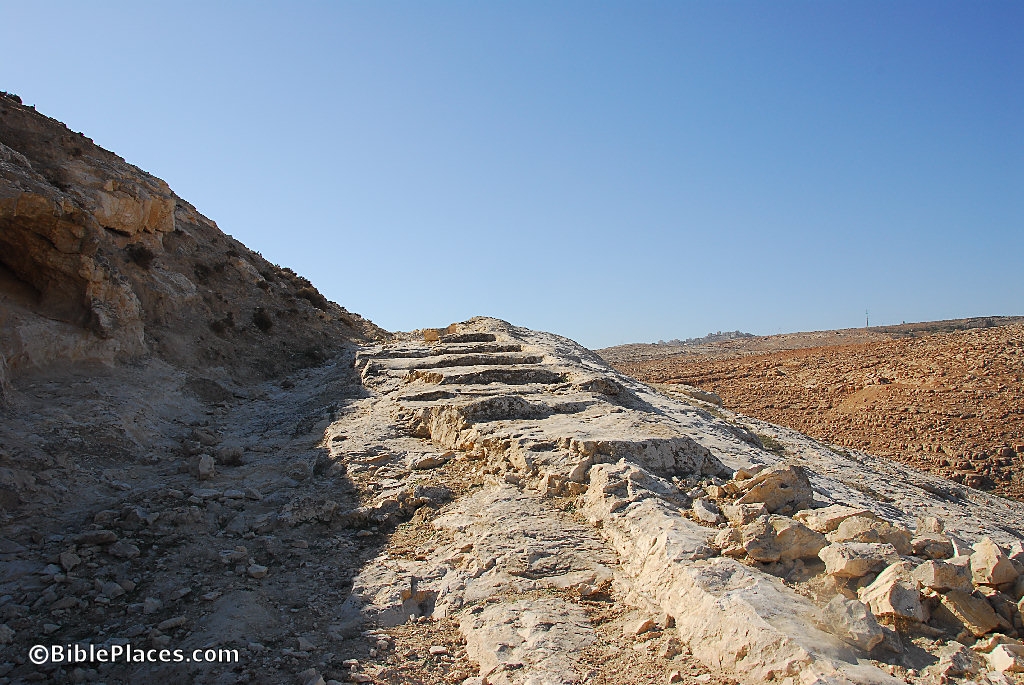
A Roman road from Jericho to Jerusalem

A man was going down from Jerusalem to Jericho, and fell into the hands of gang members, who stripped him, beat him, and went away, leaving him half dead.  Now, by chance, a member of the IDF was going down that road; and when he saw him, he passed by on the other side, thinking that it may be an ambush. So likewise a Rabbi, when he came to the place and saw him, passed by on the other side.

A Palestinian man
A Palestinian man

But a Palestinian while traveling came near him; and when he saw him, he was moved with pity. He went to him and bandaged his wounds, having cleansed them. Then he put him in his car, and took him to an inn and took care of him. The next day, he took out a day’s pay and gave it to the innkeeper and said, “Take care of him; and when I come back, I will repay you whatever more you spend.”

See, the Samaritans were the most hated group of people by the Israelites. They did not interact with each other, and they certainly didn’t touch each other – even moreso when one of them was hurt and bleeding. Travelling Jews would even take longer routes to avoid going into Samaritan land. So when Jesus described the actions of the Samaritan as the one to be held up as ideal, he really shocked a number of people.

Maybe your Samaritan is something different. Maybe it’s the Good Centrelink Employee. Maybe it’s the Good Boat Person. Maybe it’s the Good Politician. Maybe it’s the Good Christian. Whoever that person is, the actions that flow from that is what counts.

Go and do likewise

In Jesus’ day, it was thought that the priests and the Levites were the people that were good. They knew the law and they followed it. They knew that to touch someone who was bleeding would make themselves unclean. But for Jesus, these two commandments override everything else. So sure, remain clean, but not at the expense of loving your neighbour. Jesus poses a question to the lawyer and asks who was a neighbour? The lawyer can’t even bring himself to say Samaritan, so he says “The one who showed him mercy”, but he is the one that Jesus says to emulate in their behaviour.

So what are we to do? We must make sure that through our programs we are caring for every person that comes through our door. The way that care looks might look a bit different for each person , but we need to meet them where they are, meet their immediate needs, and minister to them in that way.

William Booth, founder of The Salvation Army, once said, “What is the use of preaching the Gospel to men whose whole attention is concentrated upon a mad, desperate struggle to keep themselves alive?” I guess that’s the whole idea behind the traditional Salvo saying of “Soup, Soap and Salvation” – you won’t save a man if he’s hungry and not clean. Indeed, there’s a theory in the Social Services called

Maslow's Heirarcy of Needs
Maslow’s Heirarcy of Needs

Mazlow’s Heirarchy of needs, which defines different levels of needs for a person to function in society. The basic theory goes that if one of the lower level needs aren’t met, a person can’t begin to process any of the higher level needs. So if someone’s worried about where their next meal is going to come from, there’s no point trying to convert them to Christianity. Instead, meet their immediate needs – get them some food.

Like the Samaritan in our parable, he didn’t try to convert him, or to seek out revenge against the bandits. His first action was to get the man to a safe place, then look after his wounds, and when he could stay no longer, he made provisions for his continued healing.

Similarly, while we are called as a church to go and do likewise, you in your life are called to go and do likewise as well. Jesus said that the love of neighbour was one of the two great commandments, and to be neighbourly, we need to show love and mercy to all that we meet, caring for their lives – both physically and emotionally, and living out the Gospel of Christ in our lives.

So go. Be like the Samaritan, and show mercy and compassion to all that you meet. Go and live life with your neighbours, whoever they may be. Get in along side them.