

As has been my tradition, every sermon that I preach will be posted here. This sermon, Call and Be Called, was given at The Salvation Army Rochester on Sunday October 28, 2018. The Reading was Mark 10:46-52
Places of welcome
Last week, Liesl and I ran off at the end of the service. So I apologise to anyone who wanted to speak to us, but we weren’t available. Remember, you can always pop in and see us during the week, or call us and we’d be more than happy to come round and have a chat, if that’s what you need. But I wanted to share with you a couple of experiences that I’ve had this week.
As you know, our wonderful Davey has been diagnosed with Autism. And because of the way that his brain is wired, it means that we often don’t go out. We’ve got a few places that we’re familiar with – the playgroup at Nanneela, Gravity Shack at Echuca, Mainly Music, Church, etc. But taking Davey to somewhere new is often really difficult. On our holidays just recently, there were some Sunday’s where we didn’t go to Church, because going to a place where we have this unstated expectation that he sit down, be quiet, and not noticed is just sometimes too much for us. We end up stressing over what he might do next, that we don’t end up getting anything out of the service. And so there were some weeks where we just stayed home, or only one of us went, because it was better for our soul to do it that way.

And so last week, we attended this event called Siblings Rock. It was an event put on for children with disabilities and their siblings, and their parents. It allowed the kids to have an awesome afternoon, and allowed the parents to have a bit of time to switch off. So while Davey and Annabelle had an incredible afternoon at Parky’s Playcentre in Bendigo, playing on the indoor playground, having their fingernails and toenails painted, and playing lots and eating lots, Liesl and I got to go and see the movie Ladies in Black at Gold Class. The beautiful thing about this event was the volunteers and the staff made us feel so welcome. We were introduced to them all, so the kids felt comfortable, and we were made to feel great that we were able to go to the movies and they were so happy when we came back and said we had a great time. It didn’t even matter that we were from Campaspe shire, and they were running it from Castlemaine Health. It was so welcoming and inclusive of all people that we can’t wait for it to happen again next year.
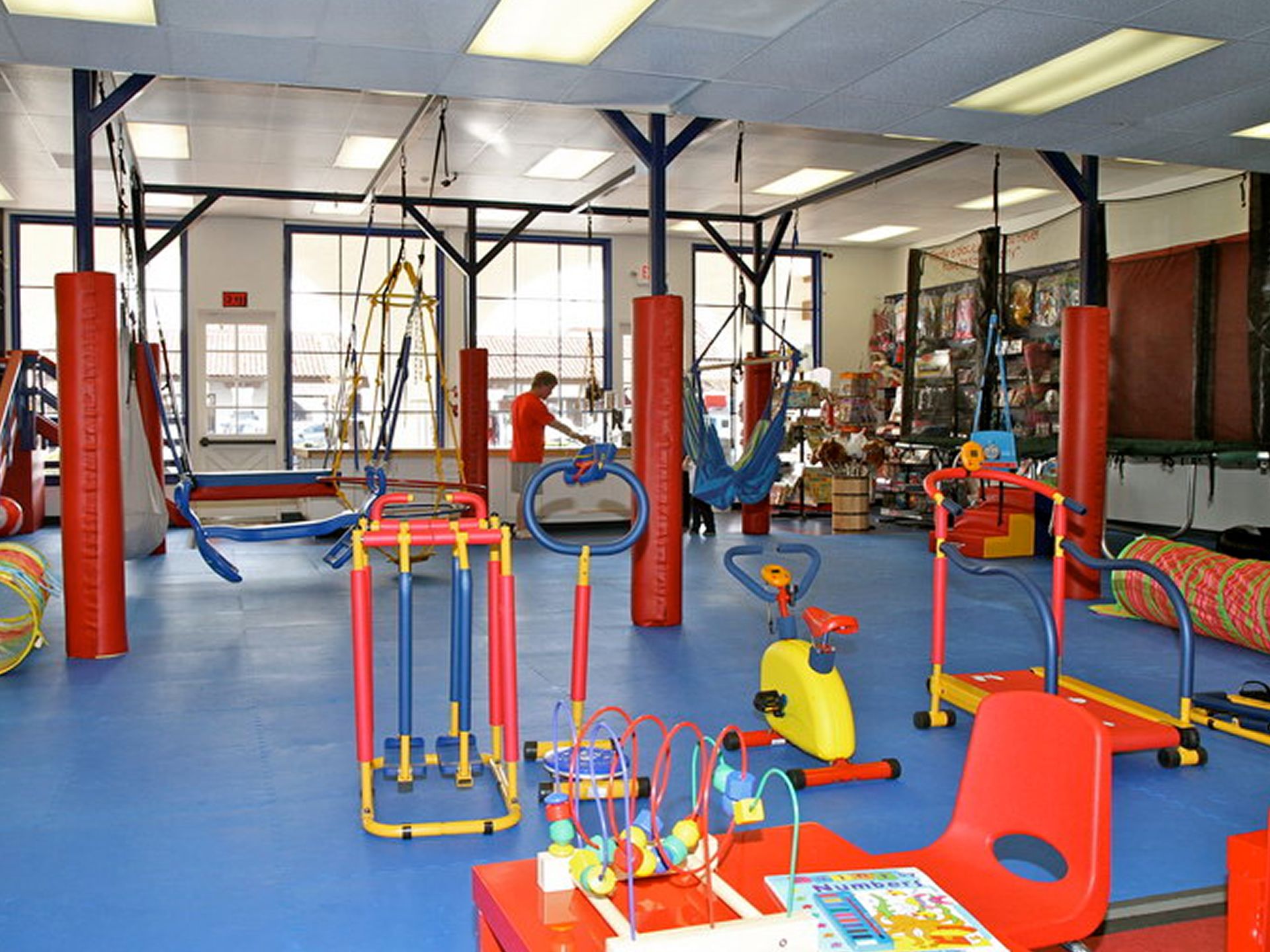
Yesterday, Liesl and I were in Melbourne. Liesl went to a spiritual retreat, while I took the kids to another playcentre, one called “We Rock the Spectrum”. This is an awesome place that is designed for kids on the spectrum, but is welcoming of all people of all abilities. They’ve got a sign on the wall that says, “Finally, a place where you don’t have to say sorry.” And that’s been our experience. So often, whenever we try to go out somewhere, we end up apologising for Davey’s behaviour – behaviour that is just him responding to the envrionmental overload his senses are receiving. So when we go here, we’re at a place where everyone there is understanding of what could be going on for the kids there. Some kids were like Annabelle and Micah – no special needs, but here having a great time. Others were like Davey – running from one sensory item to another, pulling things out and putting them somewhere else, having difficulty understanding the concept of sharing. And the most wonderful thing is that no one asks “Oh, what does your son have?” or “What’s wrong with your Daughter?” No, it is a place where everyone – kids and parents – have the ability to just be themselves. To not have to stay in. To not have to say sorry. To not have to be quiet.
We hold back who we call
There’s something odd about this reading that we heard today. Something that doesn’t quite sit right. When we think about this passage in the context of most of the other healings that Jesus does in public, there is something missing. With many of Jesus’ healings, we expect a reaction. Either the crowd is so amazed that he can not move on for some time, or go back to that town, or the Jewish leaders are so outraged that they start looking for ways to trap or arrest him.
Yet, with this miracle. We get nothing. Jesus is walking by. Someone calls out to him. He is called to Jesus. He asks to be healed. He is healed. The end.
Now, we need to be aware of a few things in considering this. The gospels are a collection of stories of Jesus of Nazareth, which have been put together to tell us about this incredible person we call the Son of God. But each narrative is different, and has a different focus. So some gospels include some stories and not others. Some write them slightly differently, some put them in a different place, to have the most narrative effect and push the particular point they are pushing.
Now Mark’s Gospel is thought to be the first gospel written, in about 70AD. Matthew and Luke draw heavily on Mark, so have a lot of similar passages, but Mark is thought to have been the first, often because of its brevity – it is the shortest of all the gospels and can be read aloud in about 90 minutes. That means that Mark often excludes details he doesn’t think to be important. The stories that Mark didn’t use, he didn’t think were the most important to share. That means that everything in Mark has been included for a purpose.
And that then brings us back to this passage – this healing that has nothing spectacular about it, no outrage, seemingly does nothing to advance the narrative. So what is happening here? Why has Mark chosen to include it?
When I did my summary of this passage earlier, I purposefully missed out an important part. When Bartimaeus calls out to Jesus, many ordered him to be quiet. Who was it that ordered him to be quiet? His disciples and his followers, the ones that he had been teaching all this time.
Why did they order him to be quiet? Well, he’s an outcast, a fringe dweller. He’s blind, he has no social supports so he has to beg on the side of the road. He is the type of person that the Jewish people would not associate with because it would make them unclean. Surely this isn’t the type of person that should be near Jesus.
Jesus shows us how and who to call
And that’s why I think Mark included this passage. Up until this point in Mark’s Gospel, Jesus had performed the following healings: a man with an unclean spirit (Mark 1:22-28), a leper (Mark 1:40-45), A paralytic (Mark 2:1-12), a man with a withered hand (Mark 3:1-6), the Gerasene demoniac (Mark 5:1-20), A woman who had been bleeding for 7 years (Mark 5:24-34), a Syrophoenician’s (that is, Gentile) daughter (Mark 7:24-30), A deaf and dumb man (Mark 7:31-37), and A blind man at Bethsaida (Mark 8:22-26). Through all of these healings, Jesus is seen to quite freely associate with the unclean, the demon possessed, the sick, women, foreigners – quite often Jesus stands on the edges of the community, and invites the outcasts to come back into the community.
Yet we have these disciples and followers of Jesus who have failed to recognise that. They tell Bartimaeus to be quiet. But he calls out even more loudly, and Jesus – seeing what is going on, doesn’t call to Bartimaeus. Instead, he instructs his disciples to call him.
Jesus shows his disciples the types of people that he wants in his church. The poor. The Sick. The Lame. The outcast. The downtrodden. The people who have no safe space. That is what Jesus is showing his disciples. That is why this story has been included.
Sometimes, we need that bit of a shove. We need Jesus to say “Yes. Even them. Go and call them to me.”
The alcoholic. “Call him here”
The addict. “Call her here”
The disabled. “Call him here”
The poor. “Call her here”
The one struggling with their mental health. “Call him here”
The asylum seeker. “Call her here.”
The minority. “Call them here”
We can create a wide and inclusive church
Jesus is inviting us to be a part of his vision for the church – a church that models itself after Christ’s own ministry. A church that is welcoming of all people, no matter where they come from. No matter what they’ve been through. Because we know that Jesus can do incredible things, and has done incredible things through our lives. Christ is calling us to be a church that is inclusive of all people. That’s why we’ve created the safe space up the back there. Liesl and I aren’t just creating things for our own children’s needs – but we’re hoping to foster in a space where no matter who comes through those doors, with whatever needs, that we will be able to cater for them. Where they will be able to come into a safe space where they don’t here “Be quiet” but “Take heart, he is calling you.” Where they will experience Jesus say to them “Your faith has made you well” – whatever well looks like to them, and that they will be able to follow Jesus on the way.
But in order to do that, there are two things that need to happen. First, we need to make the internal changes that will make people feel welcome. We need to be truly welcoming of all people. When a visitor comes, we can’t ignore them. We need to take that first step, and say “Oh, hi, my name is Ben. How are you? What brings you here? Have you met Jan? Let me introduce you.” We need to make the changes that will allow people to come and feel welcomed. Some of that might be different. Such as, who noticed the flags at the front entrance today? And having an acknowledgement of country, so that any Aboriginal and Torres Strait people who come here will know that we are a people who welcome them, and are committed to a journey of reconciliation.
Maybe that will be looking at our own internal thoughts and feelings, and letting Christ transform us. I’m not going to go into details, but there have been times through Liesl and my struggles with adjusting to life with Davey, where we have gone “If we didn’t have to come back, we wouldn’t.” And those are words that should never be mentioned in a church. Thankfully, they are rare and passing moments, but when it has been a tough day, or a long week, and Davey is just flipping out a bit more than normal, we can get frustrated as to whether the efforts we are making are worth it. Church should be a place of hope, a place of welcome, a safe space for all people. Because if we are feeling like that, and we have to come back, why would anyone who doesn’t have to come ever come back?
The welcomes that we received at the Siblings Rock and We Rock the Spectrum should be the welcomes we receive at our church. That people can come in and feel safe and at home. That’s how important creating that space is. We need to create the space – both within our physical church building, but within our own spiritual lives as well. We need to allow our spaces and ourselves to be transformed.
Go and call all people to Christ
But it’s not good enough for us to create a welcoming environment within ourselves and within our church, if no one ever comes. Jesus doesn’t invite Bartimaeus himself, though surely he would have been able to. Instead, Jesus asks his disciples to call him over.
We can pray for new people to come to church all we want. But if we don’t actually get out there and say those words, such as “Hey, there’s something happening at the Salvos on Sunday, could I pick you up?” or “Would you like to come to church on Sunday” to all people – not those people that we think are most like us, or are the least offensive – but to all people. The people that you think are least likely to accept – invite them! The people you think would make the person next to you uncomfortable – invite them! Because if we believe in the transforming power of Christ, then who knows what it is that Christ will transform them into if we give them a chance.
Take heart! Get up, Christ is calling you to go and be a part of his incredible, wide, inclusive church, by calling those that are in need of Christ – everyone. You have been called by Christ – to and call others likewise.
 Ben Clapton